The difference between amateur and professional recordings often comes down to stereo microphone placement techniques that create proper spatial imaging without phase problems.
Stereo recording transforms mono sound sources into three-dimensional sonic landscapes. The microphone techniques determine whether listeners hear convincing width and depth or confusing phase cancellation that destroys the mix. Each stereo method solves specific acoustic challenges while creating distinct spatial characteristics.
This guide covers the four essential stereo microphone techniques every recording engineer needs to master. We examine XY coincident placement, ORTF near-coincident positioning, AB spaced pair arrangements and Mid-Side matrix encoding with practical setup instructions and real-world applications.
XY Coincident Technique
XY stereo places two identical cardioid microphones at the same point in space with capsules angled 90 to 120 degrees apart. The Shure SM81 pair works excellently for this technique due to matched frequency response and tight cardioid patterns. Position the left microphone pointing 45 degrees left of centre and the right microphone pointing 45 degrees right of centre.
This technique eliminates phase problems because both capsules occupy the same acoustic space. The time arrival differences come purely from the directional pickup patterns rather than physical spacing. XY produces a focused stereo image with good mono compatibility but narrower width compared to spaced techniques. The sweet spot sits directly in front of the microphone pair at a distance equal to the source width.
XY works particularly well for drum overheads, acoustic guitar recording and small ensemble capture. The technique handles low-frequency content without the phase cancellation issues that plague spaced microphone arrangements. Set up XY pairs approximately two to three feet above drum kits or position them two feet away from acoustic instruments for optimal results.
ORTF Near-Coincident Method
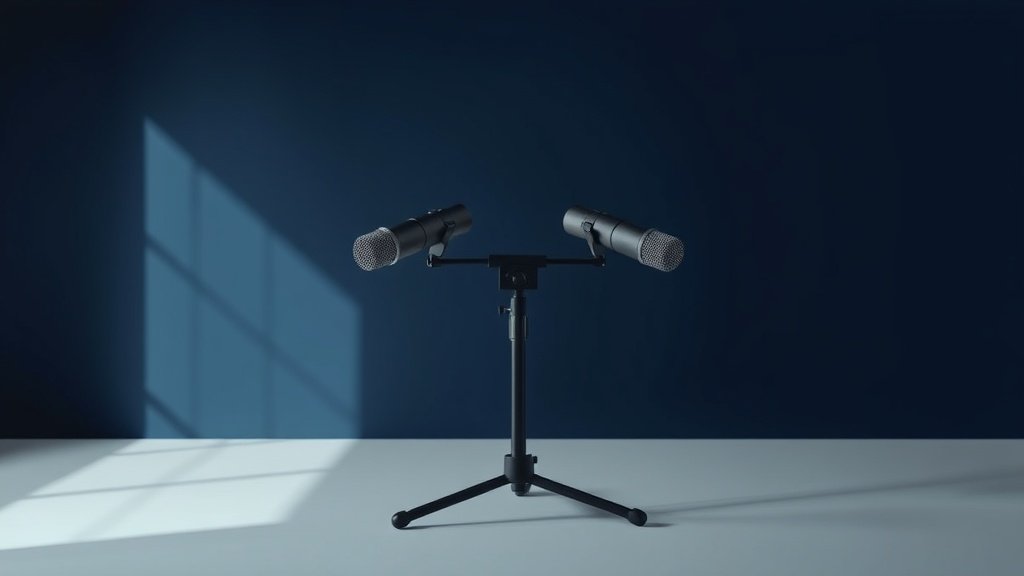
ORTF combines the phase coherence advantages of coincident techniques with the spatial width of spaced arrangements. This French radio standard places two cardioid microphones 17 centimetres apart with capsules angled 110 degrees from each other. The Neumann KM184 matched pair delivers excellent results with this technique due to precise manufacturing tolerances and linear frequency response.
The 17-centimetre spacing creates subtle time delays between the left and right channels while the 110-degree angle provides level differences through directional pickup patterns. These interaural time and level differences mimic human hearing more closely than pure XY techniques. ORTF produces wider stereo imaging than XY while maintaining better mono compatibility than widely spaced arrangements.
This technique excels for orchestra recording, choir capture and room ambience pickup. The natural spatial presentation works well for acoustic music that benefits from realistic stereo width. Position ORTF arrays three to five feet from ensembles or use them as drum overheads when the kit needs more apparent width than XY provides.
Phase coherence between left and right channels determines whether stereo techniques enhance or destroy the final mix.
AB Spaced Pair Configuration
AB stereo uses two identical microphones spaced several feet apart and pointed straight ahead or slightly angled inward. The technique relies entirely on time arrival differences to create stereo imaging. Matched condensers like the Audio-Technica AT4050 pair work well because consistent frequency response prevents tonal imbalances between channels that would shift the stereo image.
Spacing distance determines the stereo width and phase relationship. Three to ten feet separation creates increasingly wide stereo images but introduces phase cancellation when the channels are summed to mono. The time delays between channels can exceed the wavelength of mid-frequency content, causing comb filtering that creates hollow or phasey sounds through speakers.
AB techniques work best for sources that benefit from exaggerated width and will not be summed to mono during playback. Piano recording often uses AB placement with microphones positioned over the bass and treble sections of the instrument. Large drum kit recording sometimes employs AB overheads when maximum width outweighs mono compatibility concerns. Always check mono compatibility when using AB techniques for commercial releases.
Mid-Side Matrix Technique
Mid-Side recording uses two microphones with different polar patterns to capture centre and side information separately. A cardioid microphone points toward the source to capture the mid signal while a figure-8 microphone positioned at 90 degrees captures the side signal. The Royer R-121 ribbon provides excellent figure-8 response for the side channel when paired with a quality cardioid like the Shure SM57.
The technique requires matrix decoding to create left and right channels. The mid signal feeds both left and right channels equally while the side signal feeds the left channel in phase and the right channel out of phase. This creates M+S for the left channel and M-S for the right channel. Most digital audio workstations include Mid-Side decoder plugins for this conversion.
Mid-Side offers unique post-recording control over stereo width by adjusting the balance between mid and side signals. Reducing the side signal creates a narrower stereo image while boosting it increases apparent width. The technique works exceptionally well for acoustic guitar, piano and drum overheads when flexibility in stereo imaging is required during mixing. Professional mastering often uses Mid-Side processing to adjust stereo width without affecting mono compatibility.
Choosing the Right Technique
Source material characteristics determine the optimal stereo technique. Close sources like acoustic guitars benefit from XY or ORTF techniques that provide natural stereo width without excessive room sound. Large ensembles often require AB spacing to capture the full width of the performance while individual instruments may need Mid-Side techniques for mixing flexibility.
Room acoustics influence technique selection significantly. Reverberant spaces work well with coincident techniques that minimise room pickup while dead rooms may require spaced techniques to add spatial interest. Consider the listening environment as well since techniques with poor mono compatibility cause problems through small speakers or streaming services that sum stereo content.
Microphone quality becomes critical with stereo techniques because any differences between the pair create imaging problems. Matched microphones from the same production batch ensure consistent frequency response and sensitivity. Even small differences in high-frequency response shift stereo images toward the brighter microphone and create unstable spatial positioning.
Using mismatched microphones for stereo pairs creates unstable imaging and frequency response problems. Even microphones of the same model can vary enough to shift stereo images. Purchase matched pairs from manufacturers or measure response differences and compensate with equalisation.
Ignoring mono compatibility when using spaced microphone techniques causes phase cancellation issues. Wide AB spacing creates time delays that cause comb filtering when summed to mono. Always check mono compatibility during recording and mixing stages.
Positioning stereo microphones too close to reflective surfaces introduces comb filtering from delayed reflections. Hard floors, walls and ceilings create secondary sound sources that interfere with direct pickup. Use absorption materials or reposition microphones to minimise reflection problems.
Conclusion
Mastering these four stereo techniques provides the foundation for professional spatial recording. XY and ORTF offer phase-coherent imaging for most applications while AB and Mid-Side techniques provide specialised solutions for specific requirements. Choose techniques based on source material, room acoustics and playback system requirements rather than following rigid rules.

FREE DOWNLOAD
Stop Guessing. Start Buying Smart.
The specs that actually matter, demystified.
Headphones, microphones, the spec sheet jargon you can ignore — all in one quick-reference PDF. Free, instant, no fluff.
Send Me the CheatsheetYou'll also receive occasional new guide notifications. Unsubscribe anytime. No spam, ever.