A few millimetres of capsule diameter separate the warm intimacy of a vocal booth from the crisp precision of orchestral recording, yet most engineers focus entirely on brand names whilst ignoring this fundamental difference.
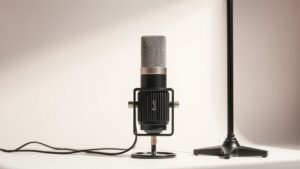
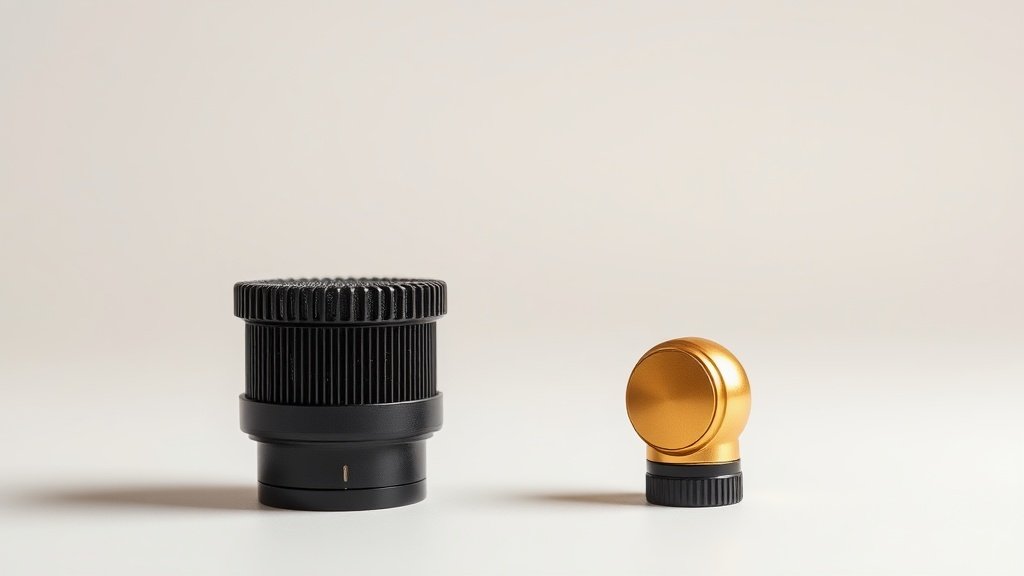
Microphone diaphragm size directly controls how a capsule responds to sound waves, affecting everything from frequency response to off-axis behaviour. Large diaphragm condensers typically measure 25mm or more, whilst small diaphragm designs stay under 16mm, and this physical difference creates measurably different sonic characteristics that determine which microphone works best for specific recording situations.
This guide examines how capsule diameter affects sensitivity, frequency response, polar pattern consistency, and proximity effect, then explains which diaphragm size suits different recording applications from vocal tracking to drum overheads.
Large Diaphragm Characteristics and Behaviour
Large diaphragm condensers like the AKG C414 or Neumann U87 capture sound with greater sensitivity than their small diaphragm counterparts because more surface area means more movement per unit of sound pressure. This increased sensitivity translates to higher output levels and better signal-to-noise ratios when recording quiet sources, making large diaphragm mics the standard choice for vocal recording where every whispered detail matters.
The extended surface area also affects frequency response in predictable ways. Large diaphragms exhibit more pronounced proximity effect — that bass buildup when sources get close — because lower frequencies create more diaphragm movement relative to the capsule size. The Rode NTK demonstrates this behaviour clearly, adding substantial low-end warmth when vocalists work within six inches but maintaining neutral response at proper distance.
Polar pattern consistency presents the biggest technical limitation of large diaphragm designs. As frequency increases, the diaphragm becomes large relative to the wavelength, causing directional patterns to narrow considerably above 5kHz. A cardioid pattern that rejects sound perfectly at 1kHz might only provide minimal rejection at 10kHz, which explains why large diaphragm mics sometimes capture more room tone than expected during bright source recording.
Small Diaphragm Precision and Applications
Small diaphragm condensers like the Shure KSM137 or Audio-Technica AT4041 maintain consistent polar patterns across their entire frequency range because the capsule remains small relative to most audible wavelengths. This consistency makes them superior for applications where off-axis rejection matters more than maximum sensitivity, particularly drum overhead recording where cymbals create complex directional sound fields.
The reduced surface area of small diaphragm capsules means less proximity effect and more linear frequency response when sources move during recording. Acoustic guitar tracking benefits significantly from this behaviour because players naturally shift position whilst performing, and small diaphragm mics like the Neumann KM184 maintain consistent tonal balance regardless of minor distance changes.
Large diaphragm sensitivity wins for controlled vocal recording whilst small diaphragm consistency dominates complex acoustic environments.
Frequency Response Differences in Practice
Large diaphragm mics typically exhibit gentle high-frequency emphasis between 5kHz and 15kHz, creating the air and presence that makes vocals sit forward in dense mixes. The Neumann TLM103 exemplifies this response curve with its subtle 4kHz boost that enhances vocal intelligibility without harsh sibilance. This frequency shaping happens naturally due to the mechanical resonance characteristics of larger diaphragm assemblies.
Small diaphragm designs generally provide flatter response curves with less inherent colouration, making them better suited for sources where accuracy matters more than character enhancement. Piano recording demonstrates this difference clearly — a large diaphragm might add pleasing warmth to intimate solo pieces, whilst small diaphragm precision captures the full harmonic complexity needed for classical or jazz ensemble work where every overtone contributes to the musical texture.
Transient response also varies between diaphragm sizes, with smaller capsules responding faster to sudden level changes due to reduced mass. Percussion instruments with sharp attacks benefit from this quicker response, which explains why engineers consistently choose small diaphragm mics for drum kit overheads despite their lower sensitivity compared to large diaphragm alternatives.
Sensitivity and Signal-to-Noise Considerations
Large diaphragm condensers produce higher output levels from identical sound sources, typically measuring 10-20mV/Pa compared to 5-15mV/Pa for small diaphragm designs. This sensitivity advantage becomes crucial when recording quiet sources through budget audio interfaces with modest preamp gain, as higher mic output means less preamp amplification and consequently lower noise floors in the final recording.
However, this sensitivity becomes problematic with loud sources where large diaphragm mics reach maximum SPL limits before small diaphragm alternatives. Drum recording illustrates this limitation clearly — whilst a large diaphragm mic might clip on snare hits that a small diaphragm design handles comfortably. The Shure KSM32 manages 144dB SPL maximum, whilst comparable large diaphragm mics typically max out around 130dB even with pad switches engaged.
Self-noise specifications also favour large diaphragm designs, with the best examples achieving equivalent noise levels below 7dBA compared to 13-16dBA for quality small diaphragm mics. This four to six decibel difference matters significantly for quiet acoustic recording where any background hiss becomes audible during soft passages or between musical phrases.
Practical Application Guidelines
Vocal recording almost always benefits from large diaphragm sensitivity and natural frequency enhancement, particularly when tracking lead vocals that need to cut through full arrangements. The warm proximity effect adds desirable intimacy for pop and rock vocals, whilst the high-frequency presence helps vocals maintain clarity even through heavy processing and compression during mixing.
Acoustic instrument recording requires more careful consideration of the recording environment and musical context. Solo acoustic guitar or piano often sounds more engaging through large diaphragm character, whilst ensemble recording demands small diaphragm accuracy to preserve the natural balance between multiple instruments. Orchestral recording consistently uses small diaphragm mics because maintaining proper instrumental relationships matters more than enhancing individual sections.
Ambient recording and sound design work generally favours small diaphragm precision, as these applications require accurate capture of complex acoustic environments where any frequency colouration changes the perceived space. Room tone recording for film post-production exemplifies this need — small diaphragm mics capture the subtle acoustic signature of spaces without adding unwanted character that might conflict with dialogue or music elements added during mixing.
Assuming large diaphragm mics always sound better because they cost more. Price reflects build quality and brand reputation more than sonic superiority, and small diaphragm precision often suits specific applications better than large diaphragm sensitivity.
Using large diaphragm mics for drum overheads because they look more professional. Drum cymbals create complex directional patterns that require consistent polar response, making small diaphragm designs technically superior despite lower visual impact during tracking sessions.
Choosing microphones based on frequency response charts without considering diaphragm size behaviour. Specifications show on-axis response only, whilst real recording involves off-axis sound that behaves differently between large and small diaphragm designs regardless of published frequency curves.
Conclusion
Microphone diaphragm size determines fundamental recording characteristics that matter more than brand names or price points. Large diaphragm sensitivity suits controlled vocal tracking, whilst small diaphragm consistency wins for complex acoustic sources. Choose based on the specific behaviour your recording situation demands rather than general assumptions about quality or professionalism.

FREE DOWNLOAD
Stop Guessing. Start Buying Smart.
The specs that actually matter, demystified.
Headphones, microphones, the spec sheet jargon you can ignore — all in one quick-reference PDF. Free, instant, no fluff.
Send Me the CheatsheetYou'll also receive occasional new guide notifications. Unsubscribe anytime. No spam, ever.