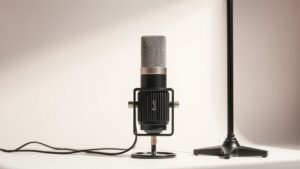
The tension in a microphone capsule diaphragm determines whether your recording sounds bright and detailed or warm and rounded, yet this fundamental principle remains invisible to most engineers.
Microphone capsule tension controls how the diaphragm responds to sound pressure waves, directly affecting frequency response, sensitivity, and harmonic character. After years of obsessively buying, using and comparing audio gear, I have learned that understanding capsule tension explains why identical microphone models can sound noticeably different.
This guide examines how diaphragm tension influences microphone performance, what causes tension changes over time, and practical methods for recognising when capsule tension affects your recordings. We will explore the physics behind diaphragm behaviour, examine real-world examples from professional microphones, and discuss maintenance approaches that preserve optimal capsule performance.
The Physics of Diaphragm Tension
Microphone capsules function like miniature drums where diaphragm tension determines resonant frequency and damping characteristics. Higher tension creates faster transient response and extends high-frequency sensitivity, while lower tension produces warmer midrange character with reduced top-end clarity. The Neumann U87 demonstrates this principle perfectly – its 34mm diaphragm maintains precise tension calibration that delivers the characteristic bright presence and smooth frequency response engineers expect.
Temperature and humidity directly affect diaphragm tension because most capsule membranes use materials that expand and contract with environmental changes. Professional studios maintain climate control not just for equipment longevity but because temperature swings of even five degrees can shift capsule resonance enough to alter recording character. The AKG C414 includes internal shock mounting partly to isolate the capsule from thermal stress that could affect diaphragm stability.
Capsule geometry amplifies tension effects through the relationship between diaphragm diameter and backplate spacing. Large-diaphragm condensers like the Audio-Technica AT4050 use 25mm capsules where small tension variations create noticeable frequency response changes, while small-diaphragm models such as the Schoeps CMC6 system maintain more consistent performance because smaller membranes resist tension drift.
How Tension Changes Frequency Response
Increased diaphragm tension raises the primary resonance frequency, boosting high-frequency sensitivity while potentially creating harshness in the upper midrange. Professional microphones like the Rode NTK achieve their smooth frequency curves through careful tension calibration during manufacturing, but age and environmental stress can shift this balance over time. Studio engineers often notice older condenser microphones developing excessive brightness or sibilance – classic symptoms of rising diaphragm tension.
Decreased tension produces the opposite effect, lowering resonant frequency and reducing high-frequency extension while emphasising midrange warmth. This explains why some vintage microphones develop the coveted warm character that engineers prize – controlled tension relaxation creates natural high-frequency roll-off that smooths harsh digital sources. However, excessive tension loss results in muffled recordings that lack presence and detail.
The relationship between tension and polar pattern stability becomes critical in multi-pattern microphones. Models like the AKG C12 VR use dual-diaphragm capsules where uneven tension between front and rear membranes can skew polar patterns and create frequency response irregularities that vary with pickup direction. Professional maintenance includes checking both diaphragm tensions to ensure pattern accuracy.
Diaphragm tension acts like the tuning of a drum head – too tight creates harshness, too loose loses clarity and punch.
Environmental Factors Affecting Capsule Tension
Humidity changes represent the primary environmental threat to capsule stability because most diaphragm materials absorb moisture from surrounding air. High humidity causes membrane expansion that reduces effective tension, while dry conditions create shrinkage that increases tension beyond optimal levels. The Shure KSM44A includes humidity compensation in its design specifically to maintain consistent capsule performance across varying studio conditions.
Temperature cycling creates mechanical stress that gradually alters diaphragm properties over months and years of use. Studios that experience significant daily temperature swings often report faster capsule drift in their condenser microphone collections. The sE Electronics sE2200a includes thermal compensation circuitry that helps stabilise capsule behaviour, but physical diaphragm changes still occur with extreme temperature exposure.
Acoustic overload represents another tension-altering factor that many engineers underestimate. Exposing condenser capsules to excessive sound pressure levels can permanently stretch diaphragm material, reducing tension and altering frequency response. Professional microphones like the Neumann TLM103 include protective circuitry, but physical diaphragm damage from acoustic overload requires factory recalibration to restore proper tension.
Recognising Tension-Related Problems
Frequency response shifts provide the clearest indication of changing capsule tension, particularly in familiar microphones where you know the expected sound character. A Neumann U67 that suddenly sounds harsh or sibilant likely has increased diaphragm tension, while the same microphone sounding muffled or lacking presence suggests tension loss. Professional engineers perform regular listening tests with reference sources to identify gradual capsule changes before they affect important recordings.
Sensitivity variations often accompany tension changes because diaphragm efficiency depends on proper mechanical tuning. Microphones requiring unusually high gain settings compared to previous sessions may have lost diaphragm tension, while mics that seem overly sensitive could have increased tension from environmental stress. The Audio-Technica AT2020 demonstrates consistent sensitivity when properly maintained, making deviations easy to detect.
Polar pattern irregularities in multi-pattern microphones frequently indicate uneven capsule tension between front and rear diaphragms. Testing pickup patterns with known sound sources reveals whether the microphone maintains proper directional characteristics. Models like the Mojave Audio MA-50 use single-diaphragm designs partly to avoid tension-matching issues that affect dual-capsule systems.
Maintaining Optimal Capsule Performance
Environmental control provides the most effective approach to preserving capsule tension stability over time. Professional studios maintain temperature within 2-3 degrees and humidity between 40-50% to minimise diaphragm stress. Storage in climate-controlled cases when microphones are not in use extends capsule life significantly compared to leaving them exposed to daily temperature and humidity cycles.
Regular professional calibration ensures that valuable condenser microphones maintain factory-specified performance standards. Most premium microphone manufacturers including Neumann, AKG, and Schoeps offer recalibration services that include capsule tension adjustment when necessary. Annual or bi-annual calibration catches gradual changes before they compromise recording quality, particularly for microphones used in demanding professional applications.
Proper handling techniques prevent acute capsule damage that can permanently alter diaphragm tension. Avoiding phantom power switching transients, preventing acoustic overload, and protecting microphones from physical shock maintains capsule integrity. The Warm Audio WA-87 includes protection features common in professional designs, but careful operation remains essential for long-term capsule stability.
Many engineers assume all frequency response changes indicate electronic problems rather than mechanical capsule issues. Diaphragm tension affects frequency response more dramatically than most circuit variations, yet capsule problems are often overlooked during troubleshooting. Always consider mechanical causes when familiar microphones sound different.
Temperature shock from moving microphones between different environments can immediately affect capsule performance. Rapid temperature changes create temporary tension variations that alter frequency response until thermal equilibrium returns. Allow thirty minutes for capsule stabilisation when moving microphones between significantly different temperature zones.
Excessive phantom power voltage can gradually damage capsule diaphragms and alter tension characteristics. Some audio interfaces and preamps provide phantom power levels above standard 48V specifications, creating long-term stress on condenser capsules. Verify phantom power voltage stays within manufacturer specifications to prevent gradual capsule degradation.
Conclusion
Microphone capsule tension directly determines frequency response, sensitivity, and sound character through mechanical diaphragm behaviour that responds to environmental conditions and age-related changes. Understanding these relationships helps engineers identify performance issues, maintain optimal recording quality, and make informed decisions about microphone care and professional servicing.

FREE DOWNLOAD
Stop Guessing. Start Buying Smart.
The specs that actually matter, demystified.
Headphones, microphones, the spec sheet jargon you can ignore — all in one quick-reference PDF. Free, instant, no fluff.
Send Me the CheatsheetYou'll also receive occasional new guide notifications. Unsubscribe anytime. No spam, ever.