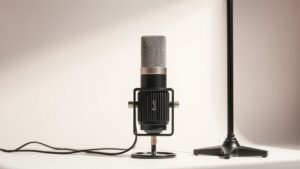
The difference between cardioid variations can make or break a recording, yet most engineers treat them as interchangeable options rather than precision tools with distinct characteristics.
Cardioid microphones dominate professional recording because they reject sound from behind while capturing everything in front. But the standard cardioid pattern represents just one option in a family of three related pickup patterns that behave very differently in real recording situations.
This guide examines how cardioid, supercardioid, and hypercardioid patterns differ in their pickup zones, rejection characteristics, and practical applications. Understanding these variations helps you choose the right microphone behaviour for specific recording scenarios rather than defaulting to whatever happens to be available.
Standard Cardioid Pattern Characteristics
The classic cardioid pattern captures sound in a heart-shaped zone that extends roughly 120 degrees in front of the microphone capsule. This pattern provides maximum sensitivity directly on-axis and gradually reduces pickup as sources move toward the sides. The null point sits directly behind the capsule at 180 degrees, creating excellent rejection of rear-facing sound sources.
Most large-diaphragm condensers like the Audio-Technica AT2020 and Rode PodMic demonstrate this standard cardioid behaviour. The pattern works exceptionally well for vocal recording because it captures the performer while rejecting room reflections and background noise from behind. The relatively wide front pickup zone accommodates natural head movement without dramatic level changes.
Standard cardioid microphones excel in controlled environments where the primary concern involves isolating the intended source from rear-facing interference. The pattern provides forgiving positioning requirements while maintaining good directional control, making it the default choice for most studio vocal work and instrument close-miking applications.
Supercardioid Pattern Behaviour
Supercardioid patterns narrow the front pickup zone to approximately 115 degrees while introducing a small rear lobe of sensitivity directly behind the capsule. This configuration creates two null points at roughly 125 degrees off-axis on either side of the microphone. The tighter front pattern provides better directional control than standard cardioid, but the rear sensitivity requires careful positioning to avoid unwanted pickup.
The Shure Beta 58A and Electro-Voice RE20 demonstrate classic supercardioid characteristics in dynamic microphone designs. The narrower pickup pattern helps these microphones reject stage monitors and nearby instruments in live sound applications. The rear lobe sensitivity means sound sources directly behind the microphone will be captured, but off-axis rejection improves significantly compared to standard cardioid patterns.
Supercardioid microphones work best when you need tighter directional control than standard cardioid provides but can position sound sources to avoid the rear pickup zone. This pattern excels for handheld vocal use, drum overhead positioning, and instrument recording where nearby sources need rejection but rear-facing isolation remains manageable through proper placement.
The rear lobe in supercardioid patterns is not a flaw but a deliberate trade-off that enables superior side rejection compared to standard cardioid microphones.
Hypercardioid Pattern Applications
Hypercardioid patterns push directional control to the extreme with a front pickup zone of approximately 105 degrees and a more pronounced rear lobe than supercardioid designs. The null points move to roughly 110 degrees off-axis, providing maximum side rejection at the cost of increased rear sensitivity. This pattern offers the tightest directional control in the cardioid family but demands precise positioning to manage the rear pickup zone effectively.
Microphones like the Beyerdynamic M 88 and certain settings on the Audio-Technica AT4050 demonstrate hypercardioid behaviour. The extremely tight front pattern makes these microphones excellent for broadcast applications where precise directional control prevents pickup of off-axis sources like paper rustling or keyboard noise. The pronounced rear lobe can actually benefit certain recording scenarios where controlled rear pickup provides useful ambient information.
Hypercardioid microphones excel in situations requiring maximum directional precision, such as broadcast booths, film dialogue recording, and critical instrument isolation. The pattern demands careful acoustic treatment and source positioning but rewards proper use with unmatched directional selectivity among cardioid variations.
Frequency Response and Pattern Consistency
Polar patterns rarely remain consistent across all frequencies, and each cardioid variation exhibits different behaviour as frequency changes. Standard cardioid microphones typically maintain their pattern most consistently, with gradual narrowing at higher frequencies. This behaviour keeps the microphone predictable across the audio spectrum while providing natural-sounding pickup characteristics.
Supercardioid and hypercardioid patterns often show more dramatic frequency-dependent changes. The rear lobe may become more pronounced at certain frequencies while the null points shift position across the spectrum. These variations affect how the microphone handles different sound sources and can create tonal changes as sources move within the pickup pattern. Understanding these frequency-dependent characteristics helps predict how each pattern will behave with various instruments and vocal ranges.
Modern microphone designs attempt to minimise pattern inconsistencies through careful capsule engineering and internal acoustics. However, some frequency-dependent behaviour remains inherent to each pattern type and should influence microphone selection for critical applications where consistent pickup characteristics across the spectrum matter most.
Proximity Effect Differences
All cardioid variations exhibit proximity effect, where bass response increases as sound sources move closer to the capsule. However, the degree and character of this effect varies between pattern types. Standard cardioid microphones typically show moderate proximity effect that remains manageable across normal working distances without excessive bass buildup.
Supercardioid and hypercardioid patterns often demonstrate more pronounced proximity effect due to their tighter directional characteristics. The increased bass boost can benefit certain sources like male vocals or instruments that need additional low-frequency weight. However, the stronger effect requires more attention to working distance and may necessitate high-pass filtering to maintain natural tonal balance.
The proximity effect behaviour of each pattern influences microphone technique and positioning requirements. Tighter patterns demand more consistent working distances to maintain even tonal balance, while standard cardioid patterns offer more forgiving proximity characteristics for applications where source positioning cannot be precisely controlled throughout the recording process.
Assuming all cardioid patterns behave identically in practical recording situations. Each variation offers different pickup zones and rejection characteristics that significantly affect recording results. Choose the pattern based on specific directional requirements rather than treating them as interchangeable options.
Ignoring the rear pickup lobe in supercardioid and hypercardioid microphones. These patterns capture sound from directly behind the capsule, which can cause feedback or unwanted pickup if not considered during positioning. Plan microphone placement to account for rear sensitivity as well as front pickup zones.
Failing to verify pattern consistency across different frequencies. Polar patterns change with frequency, and tighter patterns often show more variation across the spectrum. Test how each microphone behaves with your specific sources across their full frequency range rather than assuming consistent pattern behaviour.
Conclusion
Cardioid pattern variations provide distinct tools for different recording scenarios rather than slight modifications of the same basic behaviour. Standard cardioid offers predictable, forgiving characteristics for general use, while supercardioid and hypercardioid patterns provide increasing directional control at the cost of positioning complexity. Match the pattern to your specific isolation and pickup requirements for optimal recording results.

FREE DOWNLOAD
Stop Guessing. Start Buying Smart.
The specs that actually matter, demystified.
Headphones, microphones, the spec sheet jargon you can ignore — all in one quick-reference PDF. Free, instant, no fluff.
Send Me the CheatsheetYou'll also receive occasional new guide notifications. Unsubscribe anytime. No spam, ever.