The difference between a professional vocal recording and an amateur one often comes down to those first few centimetres of air between the singer and the microphone capsule.
Recording lead vocals demands precise microphone placement that balances proximity effect, room acoustics, and the natural dynamics of vocal performance. After years of obsessively buying, using and comparing audio gear, the positioning fundamentals remain consistent regardless of whether you are using a Neumann U87 or an Audio-Technica AT2020.
This guide covers the essential distance and angle techniques for capturing professional lead vocals, plus the placement mistakes that instantly identify amateur recordings. We will examine how different microphone types respond to positioning changes and why small adjustments create dramatic sonic differences.
Optimal Distance for Lead Vocals
The sweet spot for most lead vocal recordings sits between 15 and 25 centimetres from the microphone capsule. This distance provides enough proximity effect to add warmth and presence without overwhelming the low-frequency content or creating excessive plosive issues. Large diaphragm condensers like the Rode NTK or Shure KSM44A work exceptionally well at this range, capturing the full frequency spectrum while maintaining natural vocal tone.
Dynamic microphones such as the Shure SM7B or Electro-Voice RE20 can handle closer positioning, often working beautifully at 10 to 15 centimetres. Their lower sensitivity and built-in proximity control make them forgiving for singers who move during performance. The trade-off involves losing some high-frequency air and requiring more gain from your preamp, but the controlled low-end response often suits rock and pop vocals perfectly.
Distance adjustments should account for the vocal style and room acoustics. Intimate ballads benefit from closer positioning to capture breath details and chest resonance, while powerful belting vocals may require additional distance to prevent overloading the capsule and maintain dynamic range. Poor room acoustics demand closer positioning to minimise reflected sound, whereas well-treated spaces allow greater working distances.
Angle and Height Positioning
Microphone angle significantly affects frequency response and off-axis rejection. Position the capsule slightly above mouth level, angled downward at approximately 10 to 15 degrees. This angle captures the direct vocal sound while reducing desktop reflections and improving off-axis performance from most cardioid microphones. The AKG C414 demonstrates this principle clearly, with its frequency response changing noticeably as you move off the central axis.
Height positioning should place the microphone capsule level with the bridge of the nose or slightly higher. This captures the primary vocal resonance while avoiding the harsh frequencies that occur when positioning too low near the mouth opening. Ribbon microphones like the Royer R-121 or AEA R84 require particular attention to angle, as their figure-8 polar pattern creates null points at 90 degrees that can dramatically affect consistency if the singer moves.
The microphone should complement the vocal performance, not fight against natural singing technique and movement.
Pop Filters and Windscreens
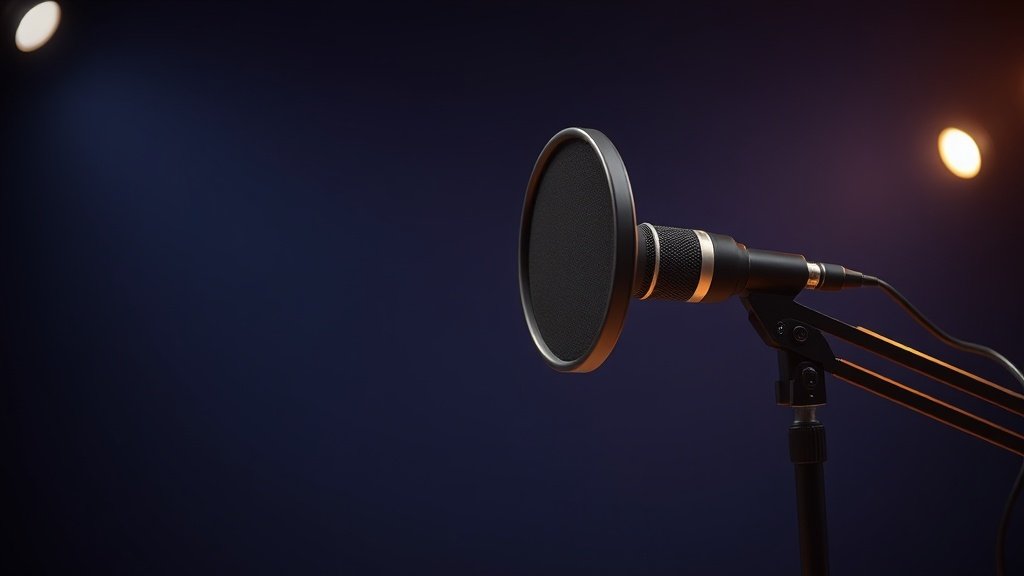
Pop filters require careful positioning to maintain optimal microphone distance while providing plosive protection. Place the filter approximately 10 to 15 centimetres from the microphone capsule, creating a working distance of 25 to 30 centimetres total from singer to microphone. The Aokeo Professional or Stedman Proscreen XL provide excellent protection without affecting frequency response when positioned correctly.
Windscreens offer an alternative solution that maintains closer working distances. Foam windscreens like those supplied with the Audio-Technica AT4040 or aftermarket options from Rycote provide adequate plosive protection while allowing singers to work closer to the microphone. However, dense foam can slightly roll off high frequencies, requiring compensation during recording or mixing.
Some engineers prefer the Shure A25D or similar internal shock mounts combined with technique coaching rather than external pop protection. This approach maintains the most direct acoustic path to the capsule but requires experienced vocalists who understand microphone technique and can control plosives naturally through breath support and diction.
Room Interaction and Acoustic Considerations
Microphone placement must account for room acoustics and potential reflection points. Hard surfaces within two metres of the microphone position create comb filtering and phase cancellation that muddy vocal recordings. Desktop reflections prove particularly problematic, bouncing sound back into the microphone capsule with a slight delay that creates hollowness in the 200 to 800 Hz range.
Ceiling height affects vocal recording quality significantly. Low ceilings below 2.5 metres create strong reflections that interfere with direct sound, requiring closer microphone positioning and additional acoustic treatment above the recording position. Higher ceilings allow more natural microphone distances but may introduce excessive room tone in untreated spaces.
Corner positioning can provide natural bass trapping that controls proximity effect, but also risks exciting room modes that colour the vocal sound. Experiment with positioning the vocalist and microphone away from parallel walls, using the room geometry to minimise standing waves while maintaining good isolation from external noise sources.
Microphone Selection and Placement Interaction
Different microphone types require adjusted placement strategies to achieve optimal results. Tube microphones like the Manley Reference Cardioid or Warm Audio WA-251 benefit from slightly increased distance due to their natural harmonic saturation, which becomes excessive when positioned too closely. The tube circuitry adds pleasing harmonics that enhance vocal presence without requiring proximity effect for warmth.
FET condensers such as the Neumann TLM 103 or Lewitt LCT 440 Pure handle close positioning well, providing clean gain and extended frequency response that captures vocal detail without colouration. These microphones excel when precise placement control is available, responding predictably to small distance and angle adjustments.
Positioning the microphone too close creates excessive proximity effect that makes vocals sound boomy and unnatural. Maintain at least 15 centimetres distance for most condenser microphones, and use high-pass filtering during recording rather than trying to fix bass buildup later.
Angling the microphone incorrectly reduces clarity and creates frequency response problems. Position the capsule slightly above mouth level pointing downward, not straight across at mouth height where breath noise and plosives cause the most problems.
Ignoring room reflections allows secondary sound sources to muddy the direct vocal signal. Identify hard surfaces near the microphone position and treat them with absorption, or reposition the entire setup to minimise reflected sound reaching the capsule.
Conclusion
Successful vocal recording depends on systematic microphone placement that considers distance, angle, room acoustics, and microphone characteristics together. Start with the 15 to 25 centimetre distance rule, adjust angle for optimal frequency response, then fine-tune based on vocal style and room behaviour. Small placement changes create significant sonic differences that determine whether your vocal recordings sound professional or amateur.

FREE DOWNLOAD
Stop Guessing. Start Buying Smart.
The specs that actually matter, demystified.
Headphones, microphones, the spec sheet jargon you can ignore — all in one quick-reference PDF. Free, instant, no fluff.
Send Me the CheatsheetYou'll also receive occasional new guide notifications. Unsubscribe anytime. No spam, ever.