Place a microphone within two feet of any hard surface and the laws of physics immediately change how it captures sound through frequency response shifts that can make or break your recording.
The boundary effect occurs when sound waves reflect off surfaces near a microphone, creating phase relationships between the direct sound and reflected sound that alter frequency response in predictable ways. Understanding this phenomenon transforms how you position microphones and explains why some placements sound brilliant whilst others sound hollow or thin.
This guide examines how the boundary effect works, when it helps your recordings, when it hurts them, and specific techniques for controlling these interactions in different recording scenarios with real microphones and acoustic environments.
How the Boundary Effect Works
When you place a microphone near any reflective surface like a table, wall, or floor, sound reaches the microphone through two paths: directly from the source and reflected off the surface. These two signals combine at the microphone capsule, creating constructive interference at some frequencies and destructive interference at others. The distance between the microphone and boundary surface determines which frequencies get boosted or cancelled.
At frequencies where the reflected path creates a phase delay of 180 degrees relative to the direct path, you get destructive interference and a notch in the frequency response. At frequencies where the phase delay equals 360 degrees or multiples thereof, you get constructive interference and a boost. The closer the microphone sits to the boundary, the higher in frequency these effects occur.
This explains why a Shure SM57 sounds different when placed on a snare drum rim versus suspended above it, or why an Audio-Technica AT4040 produces a warmer vocal tone when the performer sits at a wooden table versus standing in open space. The boundary changes the microphone behaviour fundamentally.
Measuring Boundary Distance Effects
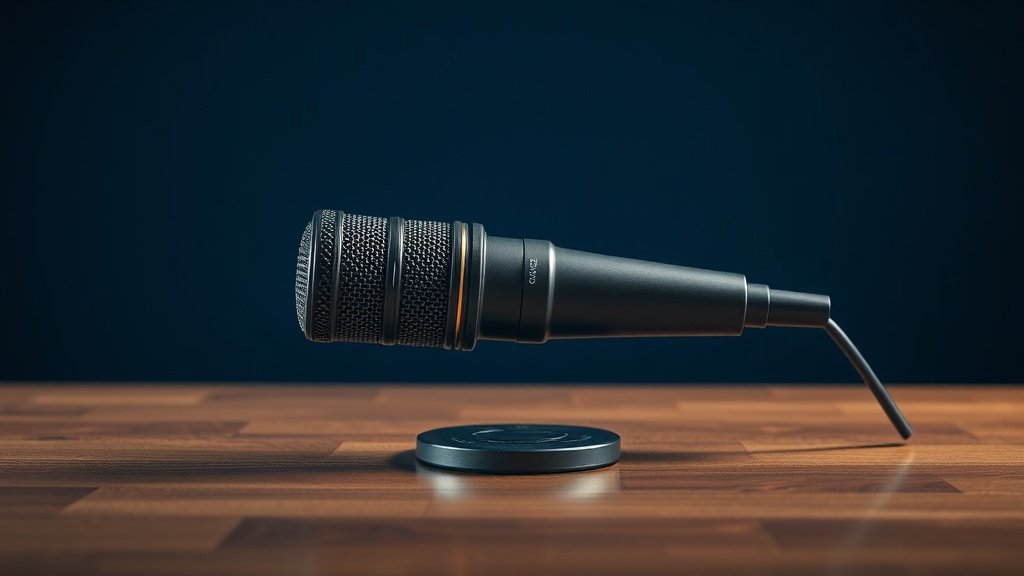
The critical measurement is the difference in path length between direct and reflected sound. When a microphone sits exactly against a hard surface with zero gap, the path lengths match perfectly and you get consistent reinforcement across all frequencies. This principle drives the design of boundary microphones like the Crown PCC-160 or Audio-Technica U851R, which mount flush to surfaces.
Problems arise when the microphone sits a few inches to a few feet from the boundary. A microphone positioned six inches from a table surface creates path length differences that cause pronounced cancellations in the 500Hz to 2kHz range, exactly where vocal intelligibility lives. Move that same microphone to 18 inches and the cancellation moves lower, affecting fundamental frequencies instead of consonants.
Professional engineers use the three-to-one rule as a starting point: keep the microphone either very close to the boundary surface (within one inch) or move it at least three times farther than the source-to-microphone distance to minimise boundary effects.
The difference between a professional vocal recording and an amateur one often comes down to understanding where reflective surfaces affect microphone response.
Practical Applications in Recording
Boundary effects work in your favour when recording piano, where placing microphones like the Neumann KM184 pair close to the inside lid creates natural reinforcement and warmth. The lid acts as a controlled boundary that enhances the piano harmonics without unwanted resonances. Similarly, recording acoustic guitar with a Rode NT5 positioned near a wooden floor or wall can add body and richness through carefully managed reflections.
For dialogue recording, boundary microphones excel in conference rooms and theatrical applications where you cannot position microphones close to speakers. A Crown PZM-6D mounted on a conference table captures clear speech from multiple participants because it uses the table surface as an acoustic amplifier, providing consistent response regardless of speaker position around the table.
Drum recording benefits from understanding boundary effects when placing overhead microphones. A pair of AKG C414s suspended three feet above a drum kit near a low ceiling will exhibit different frequency response than the same microphones in a room with high ceilings, requiring different equalisation approaches to achieve the same tonal balance.
Controlling Unwanted Boundary Effects
When boundary effects work against you, several techniques minimise their impact. Acoustic absorption on reflective surfaces near microphones reduces the strength of reflected signals, lessening the interference effects. Placing a thick blanket on a table beneath a vocal microphone like a Shure SM7B eliminates most boundary-related frequency response changes whilst maintaining the convenience of table-mounted recording.
Microphone positioning offers another control method. Angling microphones away from nearby boundaries reduces the amount of reflected sound reaching the capsule. When recording vocals with a Neumann TLM 103 near a wall, positioning the microphone at a 45-degree angle to the wall surface minimises direct reflections whilst maintaining good source pickup.
In mixing environments, understanding how boundary effects from desk surfaces affect near-field monitors helps explain why some mixing positions sound better than others. Moving monitors like Yamaha HS8s farther from desk surfaces or angling them to avoid direct reflections from the console surface creates cleaner monitoring conditions.
Room Acoustics and Multiple Boundaries
Real recording spaces contain multiple reflective surfaces that create complex boundary interactions. A microphone positioned in the centre of a small room experiences boundary effects from walls, ceiling, and floor simultaneously. These multiple reflections create comb filtering patterns that vary depending on microphone position and room dimensions.
The corner effect demonstrates extreme boundary interaction, where three surfaces meet to create significant low-frequency buildup. Placing a subcardioid microphone like the Electro-Voice RE20 in a room corner produces dramatically different bass response compared to the same microphone in open space, requiring careful consideration for broadcast or voice-over applications.
Professional studios manage multiple boundary effects through acoustic treatment and strategic microphone placement. Reflection filters like the Aston Halo or sE Electronics Reflexion Filter X work by controlling the immediate acoustic environment around the microphone, reducing boundary effects from nearby surfaces whilst allowing the natural room sound to contribute appropriately to the recording character.
Engineers place microphones in the problematic middle distance from reflective surfaces. Positioning microphones 6 to 18 inches from walls, tables, or other boundaries creates maximum frequency response disruption. Either move very close to use the boundary deliberately or move much farther away to avoid its influence entirely.
Recording setups ignore how multiple boundaries interact simultaneously. Focusing only on one nearby surface whilst ignoring floor, ceiling, and wall interactions leads to unpredictable frequency response changes. Consider all reflective surfaces within a few feet of your microphone when planning placement.
Home recording enthusiasts assume expensive microphones overcome boundary effect problems. Even premium microphones like the Neumann U87 exhibit boundary-related frequency response changes when positioned poorly relative to reflective surfaces. Proper placement matters more than microphone cost for controlling these acoustic interactions.
Conclusion
The boundary effect represents a fundamental acoustic principle that affects every recording scenario involving microphones near reflective surfaces. By understanding how distance relationships create predictable frequency response changes, you can position microphones to either exploit boundary effects for enhanced tone or avoid them entirely for cleaner capture. The key lies in deliberate placement decisions rather than accidental positioning.

FREE DOWNLOAD
Stop Guessing. Start Buying Smart.
The specs that actually matter, demystified.
Headphones, microphones, the spec sheet jargon you can ignore — all in one quick-reference PDF. Free, instant, no fluff.
Send Me the CheatsheetYou'll also receive occasional new guide notifications. Unsubscribe anytime. No spam, ever.