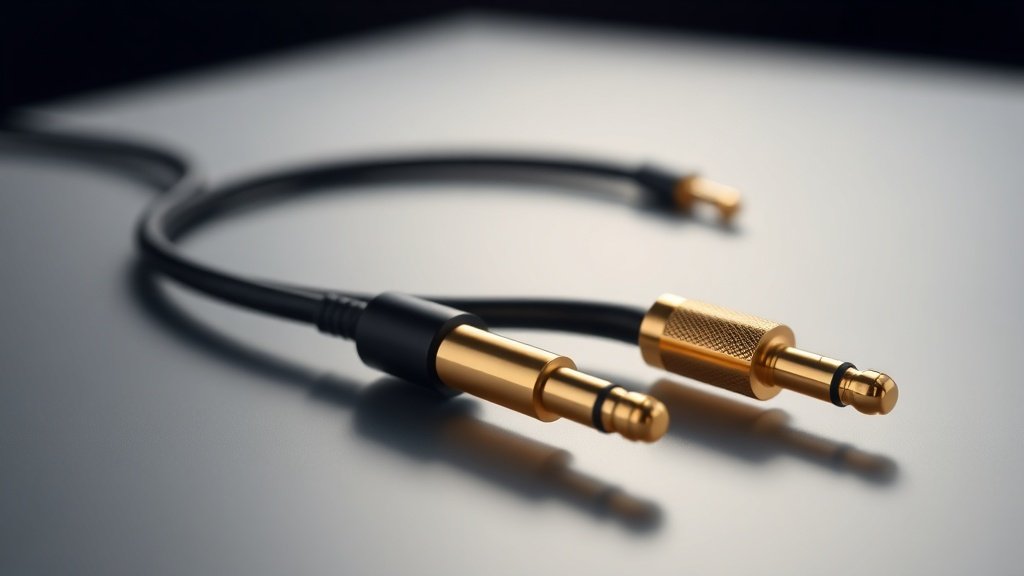
The headphone cable industry generates millions selling upgrades that measure identically to basic cables while promising revolutionary sound improvements.
After years of obsessively buying, using and comparing audio gear, the engineering reality contradicts most marketing claims about headphone cable upgrades. The electrical properties that actually influence sound reproduction operate within measurable parameters that standard cables already exceed by wide margins.
This guide examines the specific scenarios where headphone cables genuinely affect sound quality versus the far more common situations where expensive upgrades provide no measurable or audible benefit. We will cover cable resistance calculations, connector reliability issues, and the electrical specifications that determine when a cable becomes the limiting factor in your audio chain.
The Electrical Reality of Headphone Cables
Headphone cables function as simple electrical conductors carrying analog audio signals from source to driver. The primary electrical parameter affecting sound quality is resistance, measured in ohms per metre. Standard copper cables exhibit resistance values between 0.1 and 0.3 ohms per metre depending on conductor gauge. With typical headphone cable lengths of 1.2 to 3 metres, total cable resistance ranges from 0.3 to 0.9 ohms.
This resistance becomes significant only when it approaches a meaningful fraction of headphone impedance. Low impedance headphones like the Focal Utopia at 80 ohms experience negligible impact from cable resistance below 1 ohm. High impedance models like the Sennheiser HD800S at 300 ohms render cable resistance completely irrelevant. The voltage divider effect that determines signal loss requires cable resistance to exceed 10% of headphone impedance before becoming measurable.
Capacitance and inductance, the other electrical properties manufacturers cite, operate in ranges that cannot affect audio frequencies. Headphone cables typically measure 100-200 picofarads per metre capacitance. At audio frequencies below 20kHz, this capacitance presents impedance values exceeding 100,000 ohms, far too high to influence signal transmission with headphone loads.
When Cable Construction Actually Matters
Three specific scenarios create genuine sound quality differences between headphone cables. Physical damage to conductors increases resistance unpredictably, creating channel imbalances or intermittent connections. Oxidation at connector interfaces introduces variable resistance that changes with movement or temperature. Poor solder joints inside connectors create high resistance connections that degrade over time.
Cable flexibility affects long-term reliability more than immediate sound quality. Stiff cables stress connector joints and internal wire strands through repeated bending cycles. The Audio-Technica ATH-M50x stock cable demonstrates this issue with its thick, inflexible construction that frequently develops intermittent connections at the headphone entry point after eighteen months of regular use.
Connector plating provides measurable benefits for connection reliability. Gold plated connectors on cables like those supplied with Beyerdynamic DT series headphones resist oxidation that creates variable contact resistance over time. However, the sonic difference between clean unplated and gold plated connections measures below the threshold of human hearing when both connections are properly maintained.
Cable resistance becomes audibly significant only when it exceeds ten percent of total headphone impedance.
Measuring Cable Performance Claims
Marketing claims about cable soundstage, detail retrieval, and tonal balance cannot be supported through electrical measurements. Audio signals consist of voltage variations that cables either transmit accurately or attenuate based on their electrical properties. Cables cannot add information that was not present in the original signal, nor can they selectively enhance specific frequency ranges without measurable electrical filtering effects.
Blind testing consistently fails to demonstrate audible differences between competently constructed cables of similar electrical specifications. The Audio Engineering Society published multiple studies comparing various cable types in controlled listening environments. Participants could not reliably distinguish between standard copper cables and exotic materials when electrical parameters remained equivalent and connections were properly maintained.
Placebo effects create genuine perceptual differences that do not correspond to measurable signal changes. Expensive cables often receive more careful handling, better storage, and cleaner connections, all of which can produce real improvements mistakenly attributed to cable materials rather than improved connection maintenance.
Practical Cable Selection Guidelines
Choose headphone cables based on mechanical construction rather than exotic materials or marketing claims. Look for appropriate conductor gauge relative to cable length, with 24 AWG suitable for cables under 2 metres and 22 AWG better for longer runs. Flexible jacket materials like the cables supplied with Audio-Technica ATH-R70x headphones provide durability without creating stress at connection points.
Connector quality affects reliability more than sound quality. Neutrik and Rean connectors offer consistent mechanical tolerances and reliable internal connections. Avoid cables with oversized connector bodies that stress headphone jacks, particularly on portable devices where repeated insertion cycles can damage internal connections.
Cable replacement becomes necessary when resistance increases due to physical damage rather than for speculative sound quality improvements. Measure cable resistance with a basic multimeter to identify degraded cables. Values exceeding 2 ohms for typical 1.5 metre cables indicate internal damage requiring replacement.
Understanding Impedance Matching
Headphone impedance determines how cable resistance affects signal transmission, but higher impedance does not automatically require better cables. The Sennheiser HD600 at 300 ohms experiences less relative impact from cable resistance than the HiFiMAN Susvara at 60 ohms despite both being high-end models. Calculate acceptable cable resistance as 10% of headphone impedance to maintain signal integrity within audible thresholds.
Source output impedance interacts with cable resistance to determine total system impedance. High output impedance sources like some tube amplifiers already introduce significant signal attenuation, making cable resistance contributions relatively insignificant. Low output impedance solid state amplifiers provide better control over headphone drivers, but this advantage operates independently of cable choice within reasonable resistance limits.
Balanced cables provide benefits only when used with truly balanced sources and headphones designed for balanced operation. The Audeze LCD series headphones support balanced connection through their internal driver wiring, while most dynamic headphones connect balanced cables to single-ended internal wiring, negating any theoretical balanced transmission advantages.
Assuming expensive cables automatically provide better sound quality. Cable performance depends on electrical specifications rather than price, with diminishing returns above basic construction standards. Focus on connector reliability and appropriate conductor gauge instead of exotic materials.
Replacing functional cables based on marketing claims about soundstage or detail. These subjective improvements cannot be measured electrically and rarely survive blind testing protocols. Save money for headphone or source upgrades that provide measurable performance differences.
Ignoring mechanical cable problems while chasing imaginary electrical improvements. Intermittent connections and physical damage create genuine sound quality issues that cable replacement can solve. Address actual problems before considering speculative upgrades.
Conclusion
Headphone cable quality affects sound only when electrical resistance becomes significant relative to headphone impedance or when physical problems create connection issues. Standard cables exceed electrical requirements for transparent signal transmission, making expensive upgrades ineffective for improving sound quality. Focus cable selection on mechanical reliability and appropriate electrical specifications rather than marketing claims about sonic characteristics.

FREE DOWNLOAD
Stop Guessing. Start Buying Smart.
The specs that actually matter, demystified.
Headphones, microphones, the spec sheet jargon you can ignore — all in one quick-reference PDF. Free, instant, no fluff.
Send Me the CheatsheetYou'll also receive occasional new guide notifications. Unsubscribe anytime. No spam, ever.