The cushions touching your ears are not just comfort accessories but active acoustic filters that reshape everything you hear through your headphones.
After years of obsessively buying, using and comparing audio gear, I have learned that pad material ranks among the most underestimated factors affecting sound quality. The same driver in the same housing will produce noticeably different frequency response, soundstage characteristics, and listening fatigue levels depending on whether velour, leather, or memory foam sits between the driver and your ear.
This guide examines how different pad materials alter acoustic properties, why manufacturers choose specific materials for their sound signatures, and what happens when you swap pads on existing headphones. We will cover the measurable effects on bass response, midrange clarity, treble extension, and spatial imaging that result from material choices.
How Pad Material Affects Acoustic Coupling
The relationship between your ear and the headphone driver depends entirely on the acoustic seal and internal volume created by the pad material. Leather and pleather create nearly airtight seals that trap low frequencies and create a pressurised chamber around your ear. This sealed environment boosts bass response and can add 3-5 decibels of sub-bass emphasis compared to more porous materials.
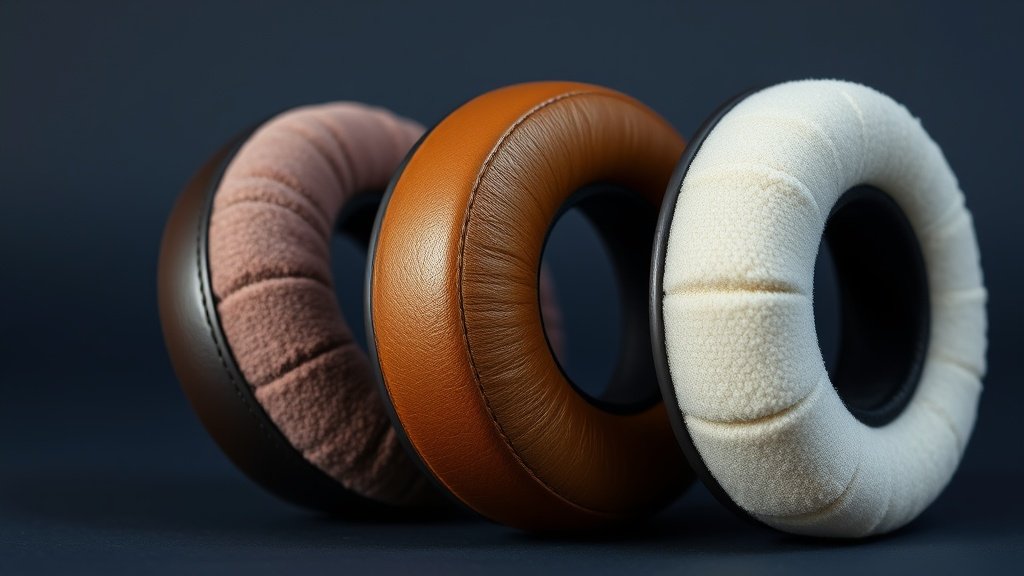
Velour and fabric pads allow controlled air leakage that reduces this bass buildup while opening the soundstage presentation. The Sennheiser HD600 series demonstrates this principle perfectly with their velour pads creating the open, natural midrange these headphones are known for. When users replace these pads with leather alternatives, the sound becomes warmer and more closed-in, fundamentally changing the headphone character.
Memory foam responds differently to pressure and temperature than traditional foam, creating variable seal strength that can affect consistency. As the foam warms and softens during extended listening, the acoustic coupling changes subtly, which explains why some headphones sound different after thirty minutes of wear compared to initial placement.
Bass Response and Low-End Control
Pad material directly controls how much bass energy reaches your ear and how well defined that bass remains. Sealed leather pads on headphones like the Audio-Technica ATH-M50x create substantial bass boost through acoustic loading, but this comes with trade-offs in control and definition. The sealed chamber can create resonances around 80-120Hz that make bass feel boomy rather than tight.
Velour pads provide more controlled bass response by allowing some pressure to escape, preventing the buildup of standing waves in the ear cup cavity. This is why studio reference headphones like the Beyerdynamic DT880 use velour padding despite the slight reduction in absolute bass quantity. The improved definition and reduced resonance serve mixing and mastering applications better than maximum bass impact.
Hybrid approaches attempt to balance these characteristics. Some manufacturers use leather outer rings with velour or fabric centres, creating partial sealing that retains some bass boost while avoiding excessive resonance buildup.
The same driver will measure 5 decibels different in bass response when switching from velour to leather padding.
Midrange Transparency and Vocal Reproduction
Midrange frequencies suffer most from poorly chosen pad materials because this range carries the fundamental frequencies of vocals and most instruments. Thick, dense padding can absorb midrange energy and create a veiled, distant presentation that pushes vocals back in the mix. Conversely, thin or overly reflective materials can create midrange peaks that make vocals sound harsh or shouty.
The thickness and density of the pad material affects the distance between your ear and the driver, which changes the frequency response in predictable ways. Moving your ear closer to the driver typically boosts upper midrange and treble while reducing bass. This explains why worn-down pads that have compressed over time often make headphones sound brighter and thinner than when new.
Velour strikes an excellent balance for midrange reproduction because it provides adequate cushioning without excessive absorption. The open weave allows sound to pass through with minimal colouration while maintaining comfortable distance from the driver. Professional headphones used for vocal recording and editing consistently favour velour or similar breathable materials for this reason.
Treble Extension and High-Frequency Detail
High frequencies prove most sensitive to the acoustic environment created by pad materials. Sealed leather pads can roll off treble extension above 10kHz due to the closed acoustic environment, while porous materials maintain better extension but may introduce different resonance characteristics. The surface texture of the pad material also matters, as smooth surfaces can create reflections that affect treble response.
Memory foam pads often compress unevenly, creating variable treble response that depends on head shape and pad placement. Some users experience treble peaks when the foam compresses in certain areas, while others report treble rolloff when the foam creates excessive distance from the driver. This inconsistency makes memory foam challenging for critical listening applications.
Manufacturer tuning often accounts for expected pad characteristics, so changing pad materials can upset carefully balanced frequency response. The Focal Utopia headphones achieve their extended treble response partly through their specific leather pad design that maintains proper driver distance while providing adequate sealing. Using different pad materials on such precisely tuned headphones typically degrades rather than improves performance.
Soundstage and Spatial Imaging Effects
Pad material significantly influences perceived soundstage width and imaging precision through its effect on acoustic reflections and seal characteristics. Completely sealed pads tend to create more intimate, closed-in presentations where instruments feel closer to your head. This can benefit certain music genres but reduces the open, spacious feeling that many listeners prefer for orchestral or ambient music.
Breathable materials like velour create more open soundstage presentations by allowing some acoustic energy to escape and interact with the environment. This reduces the pressure chamber effect and creates a more natural sense of space. However, this openness comes with reduced isolation from external noise, making such headphones less suitable for noisy environments.
The shape and thickness of pads also affects imaging by controlling the angle at which sound reaches your ears. Angled pads that position the driver slightly forward can improve imaging precision by better aligning with natural ear positioning. Some high-end headphones use asymmetrical pad designs that account for the natural angle of ears relative to the head.
Assuming all pad materials provide the same sound quality if they fit properly. Pad material acts as an acoustic filter that can boost or reduce specific frequency ranges by several decibels. Choose materials that complement your headphone design and listening preferences.
Replacing worn pads with different materials without considering acoustic effects. Even high-quality replacement pads will change the sound signature if they use different materials or thickness than the originals. Stick with manufacturer specifications for consistent performance.
Ignoring pad compression and replacement schedules for consistent sound. Compressed pads alter driver distance and acoustic sealing, changing frequency response over time. Replace pads when they no longer maintain their original thickness and shape.
Conclusion
Headphone pad material functions as an integral part of the acoustic design, not merely a comfort accessory. Understanding how velour, leather, and memory foam affect bass response, midrange clarity, treble extension, and soundstage will help you make informed decisions about headphone purchases and pad replacements. Choose pad materials that align with your listening priorities and maintain them properly for consistent performance.

FREE DOWNLOAD
Stop Guessing. Start Buying Smart.
The specs that actually matter, demystified.
Headphones, microphones, the spec sheet jargon you can ignore — all in one quick-reference PDF. Free, instant, no fluff.
Send Me the CheatsheetYou'll also receive occasional new guide notifications. Unsubscribe anytime. No spam, ever.