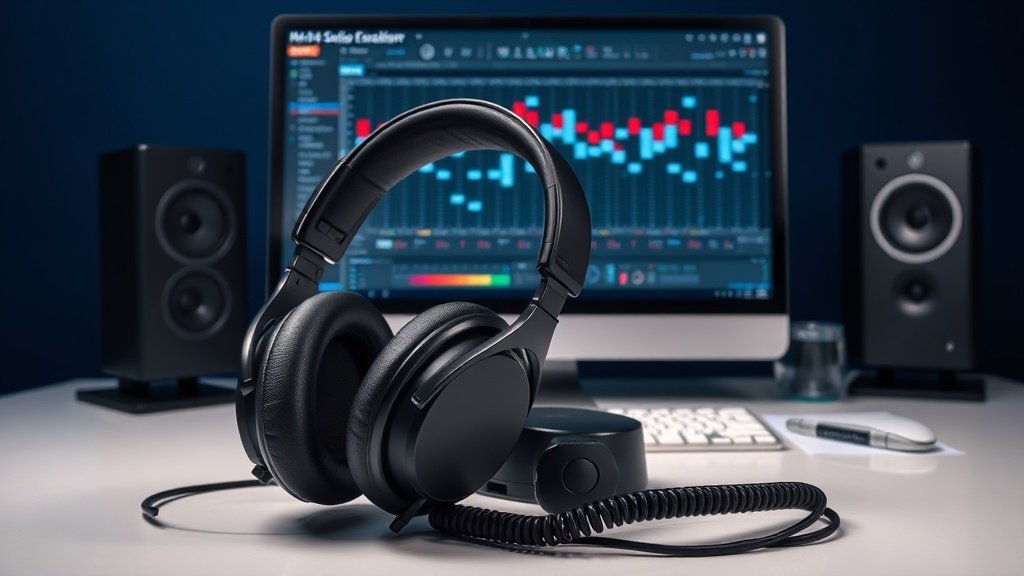
Most headphones benefit from equalisation adjustments but the wrong approach makes them sound significantly worse than leaving them completely untouched.
Headphone equalisation transforms mediocre sound into something genuinely enjoyable but requires understanding your specific model and listening preferences. After years of obsessively buying, using and comparing audio gear, the difference between good EQ and bad EQ often determines whether expensive headphones sound better than budget alternatives.
This guide covers frequency response analysis, software selection, adjustment techniques, and measurement-based approaches that deliver consistent results without the guesswork that ruins most amateur EQ attempts.
Understanding Your Headphone Frequency Response
Every headphone model has inherent frequency response characteristics that determine its tonal balance. The Sennheiser HD 600 exhibits a slight upper midrange emphasis around 3kHz while the Audio-Technica ATH-M50x shows pronounced bass emphasis below 100Hz and treble peaks around 10kHz. These characteristics are not defects but design choices that affect how music reproduction sounds through each model.
Professional measurements from sites like rtings.com or innerfidelity.com reveal these response curves with scientific precision. The Focal Utopia displays remarkably flat response through the midrange but shows minor peaks around 6kHz that can make vocals slightly forward. Understanding these measurements helps identify which frequencies need adjustment rather than randomly boosting or cutting ranges that already sound balanced.
Target curves like the Harman research target provide reference points for neutral sound reproduction. This scientifically derived curve, based on extensive listening tests, suggests slight bass elevation below 200Hz and gentle treble roll-off above 10kHz compared to perfectly flat studio monitor response. Comparing your headphone measurements against this target reveals specific frequency ranges requiring correction.
Choosing the Right EQ Software
Software selection dramatically affects EQ precision and sound quality. Equalizer APO with Peace GUI offers the most comprehensive parametric EQ controls on Windows with virtually unlimited bands and filter types. This free combination provides professional-grade processing without the CPU overhead that causes audio dropouts during intensive tasks.
SoundSource on macOS delivers system-wide equalisation with excellent parametric controls and per-application routing. Unlike basic graphic equalisers with fixed frequency points, parametric EQ allows precise frequency targeting with adjustable bandwidth control. The ability to create narrow notches for specific resonances or broad shelves for overall tonal balance makes parametric EQ essential for serious headphone correction.
Measurement software like Room EQ Wizard combined with a calibrated measurement microphone enables objective frequency response analysis. The MiniDSP UMIK-1 measurement microphone provides accurate response measurement when positioned correctly at the headphone driver location, though this approach requires technical knowledge and proper setup procedures.
Small EQ adjustments of 2-3dB often produce more musical results than dramatic 10dB boosts that introduce distortion and unnatural colouration.
Practical EQ Adjustment Techniques
Start with subtle adjustments based on known frequency response issues rather than dramatic changes. The Beyerdynamic DT 990 Pro typically benefits from 3-4dB reduction around 8kHz to tame its characteristic treble peak that causes listening fatigue. Apply a broad bell filter with moderate Q factor rather than sharp notches that create audible artifacts.
Bass adjustments require careful consideration of headphone driver capabilities. Open-back headphones like the Philips SHP9500 cannot reproduce deep bass effectively regardless of EQ boost, while closed-back models like the Audio-Technica ATH-M40x respond well to moderate low-end enhancement. Excessive bass boost beyond 6dB often causes distortion and reduces overall dynamic range, particularly on lower-powered amplifier sources.
Midrange clarity improvements often involve gentle cuts rather than boosts. The popular Sony WH-1000XM4 benefits from 2dB reduction around 500Hz to reduce muddiness and slight boost around 2-3kHz for vocal presence. These modest adjustments maintain natural tonal balance while addressing specific response irregularities that affect music enjoyment.
Advanced Measurement-Based EQ
Measurement-based equalisation delivers more consistent results than subjective adjustments alone. AutoEQ project provides scientifically derived correction curves for hundreds of headphone models based on professional measurements. These corrections target the Harman research curve and eliminate guesswork from the EQ process.
Creating custom measurements requires proper microphone placement and consistent positioning. The measurement microphone must be positioned where your ear would normally be relative to the headphone driver. Small positioning changes dramatically affect measured response, particularly in the treble range where directional characteristics become more pronounced.
Impulse response measurements reveal resonances and time-domain issues that frequency response alone cannot detect. Some headphones exhibit modal resonances around 1-2kHz that appear as sharp peaks in frequency response but also create timing issues that affect transient reproduction. Addressing these resonances with narrow parametric filters improves both tonal balance and temporal accuracy simultaneously.
Genre-Specific EQ Approaches
Different musical genres benefit from different EQ approaches based on their typical frequency content and mixing characteristics. Classical music reproduction often benefits from slightly elevated midrange presence around 1-2kHz to bring forward orchestral instruments, while electronic music may require controlled bass extension and crisp upper treble for synthesised elements.
Rock and metal recordings often have compressed dynamic range and emphasised upper midrange that can sound harsh through bright headphones like the Grado SR325e. Rolling off treble above 8kHz by 2-3dB and slightly reducing presence around 3-4kHz creates a more listenable balance for heavily compressed rock productions while maintaining clarity for acoustic material.
Jazz and acoustic recordings typically sound best with minimal EQ intervention, particularly through naturally balanced headphones like the Sennheiser HD 650. These recordings often have wider dynamic range and more natural tonal balance that reveals the benefits of accurate transducers without heavy electronic processing interference.
Applying extreme EQ boosts beyond 6dB to compensate for poor headphone design. Excessive equalisation introduces distortion and reduces dynamic range while highlighting the fundamental limitations of inadequate transducers. Choose better headphones rather than forcing poor ones to perform beyond their capabilities.
Using graphic equalisers with fixed frequency points instead of parametric controls. Graphic EQ cannot target specific problem frequencies accurately and often affects adjacent frequency ranges unnecessarily. Parametric EQ with adjustable frequency, gain, and bandwidth provides surgical precision for effective correction.
Copying EQ settings from online forums without considering individual headphone variation and personal preferences. Manufacturing tolerances mean identical headphone models can sound different, and individual hearing characteristics vary significantly. Use published settings as starting points but adjust based on your specific combination of equipment and preferences.
Conclusion
Effective headphone equalisation requires understanding your specific model frequency response, choosing appropriate software tools, and making subtle adjustments based on measured performance rather than random experimentation. Start with gentle corrections targeting known issues, verify changes with familiar music, and remember that less intervention often produces more musical results than heavy-handed processing.
FREE DOWNLOAD
Stop Guessing. Start Buying Smart.
The specs that actually matter, demystified.
Headphones, microphones, the spec sheet jargon you can ignore — all in one quick-reference PDF. Free, instant, no fluff.
Send Me the CheatsheetYou'll also receive occasional new guide notifications. Unsubscribe anytime. No spam, ever.