Most people think in-ear monitors and earbuds are the same product with different price tags, but the engineering differences run much deeper than cost.
After years of obsessively buying, using and comparing audio gear, the fundamental differences become clear immediately. These two product categories solve different problems using distinct approaches to driver technology, acoustic isolation, and fit design.
This guide examines the specific engineering differences between IEMs and earbuds, covering driver configurations, seal requirements, and how these design choices affect sound quality in practical use. We will look at real products to illustrate key distinctions that matter for audio quality.
Driver Technology and Configuration
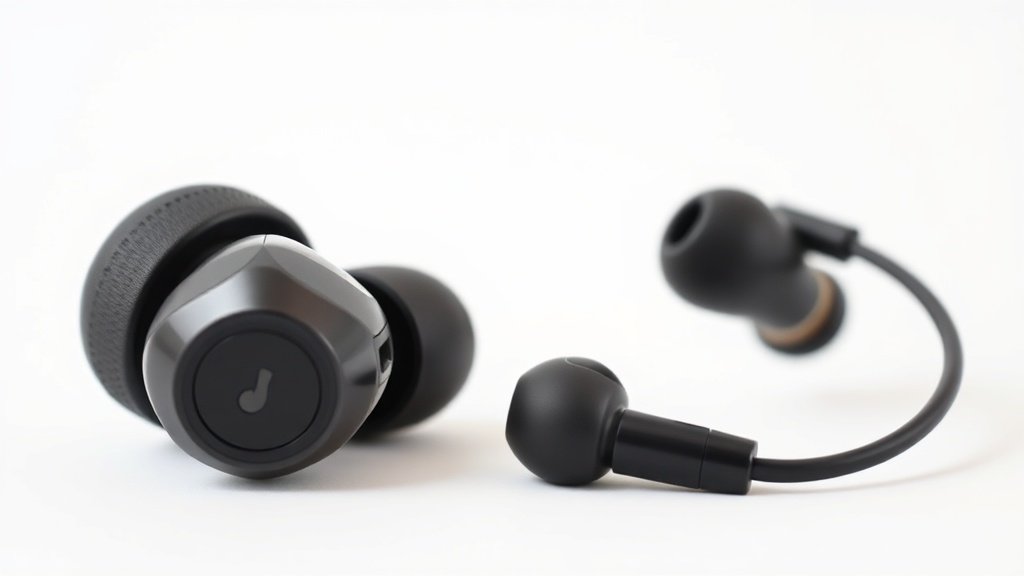
Traditional earbuds like the Apple EarPods or Samsung Galaxy Buds use single dynamic drivers positioned outside the ear canal. These drivers typically measure 6mm to 12mm in diameter and rely on the natural acoustics of your outer ear to shape the sound. The driver fires sound toward the ear canal opening rather than directly into it, creating a more diffuse acoustic presentation.
Professional IEMs take a fundamentally different approach with multiple driver configurations sealed directly in the ear canal. The Shure SE535 uses dual balanced armature drivers with a crossover network, whilst higher-end models like the Ultimate Ears UE18+ Pro employ six balanced armature drivers with a three-way crossover. Some IEMs combine driver types, such as the Campfire Audio Andromeda which uses five balanced armature drivers, or hybrid designs like the 64 Audio A12t that combines dynamic and balanced armature drivers.
Balanced armature drivers excel at detailed reproduction in specific frequency ranges but require crossover networks to handle full-range audio. Dynamic drivers in IEMs like those found in the Etymotic ER4XR provide natural bass response and coherent phase relationships across the frequency spectrum. The choice between driver types affects tonal balance, efficiency, and how the IEM responds to different source impedances.
Acoustic Isolation and Seal Design
Earbuds sit in the outer ear without creating an acoustic seal, allowing ambient noise to mix with the audio signal. This open design means you hear environmental sounds alongside your music, which can be safer for outdoor use but limits bass response and detail resolution in noisy environments. The loose fit also means bass frequencies escape rather than reaching your eardrum effectively.
IEMs create a sealed acoustic environment using silicone or foam tips that block external noise by 15 to 25 decibels. This isolation serves two critical functions: it prevents audio leakage and eliminates the need to increase volume levels to overcome background noise. Custom-moulded IEMs like those from 64 Audio or Ultimate Ears Professional provide even better isolation, often achieving 26 to 30 decibels of noise reduction.
The sealed environment also enables proper bass reproduction since low frequencies cannot escape around the ear tip. This is why the same driver can sound thin in an earbud configuration but deliver solid bass response when properly sealed in an IEM design. Poor tip selection immediately reveals itself through reduced bass and compromised isolation.
The sealed acoustic environment of IEMs enables bass reproduction that remains impossible with the open design of traditional earbuds.
Frequency Response and Tonal Balance
Earbud frequency response depends heavily on individual ear anatomy since the drivers interact with your outer ear structure. The Apple AirPods Pro attempt to compensate for this variability using adaptive EQ, but the fundamental limitation remains that sound must travel through air gaps before reaching your ear canal. This typically results in reduced bass impact and inconsistent treble response between users.
IEMs deliver more predictable frequency response since the sealed environment eliminates variables from outer ear acoustics. However, this direct coupling also reveals every aspect of the driver and crossover design. Well-engineered IEMs like the Etymotic ER2XR maintain flat response from 20Hz to 16kHz, whilst others like the Campfire Audio Vega emphasise bass and treble for a more exciting presentation. The sealed design means these tonal characteristics remain consistent regardless of your ear shape.
Professional IEMs often include user-adjustable frequency response through removable filters or switches. The Ultimate Ears UE11 Pro features a three-position switch that alters the high-frequency response for different monitoring applications. This level of customisation remains impractical with earbud designs due to their acoustic coupling limitations.
Comfort and Long-Term Wearability
Earbuds rely on the natural contours of your outer ear for retention, which works well for some ear shapes but fails completely for others. The one-size-fits-most approach means many users experience discomfort during extended listening sessions or find that earbuds fall out during movement. Even well-designed earbuds like the Sony WF-1000XM4 can cause fatigue since they must apply pressure against ear cartilage for retention.
IEMs distribute weight and pressure differently by using the ear canal itself for primary retention. Quality silicone tips like those from Comply or SpinFit conform to your ear canal shape, creating comfortable long-term wear without external pressure points. Professional musicians routinely wear IEMs for four-hour concert performances, something that would be uncomfortable or impossible with traditional earbuds.
The tip selection process becomes crucial for IEM comfort and performance. Most quality IEMs include multiple tip sizes and materials, whilst companies like Etymotic offer extensive tip varieties for different ear canal shapes. Custom-moulded IEMs eliminate fit issues entirely but require impressions from an audiologist and significantly higher cost.
Power Requirements and Source Compatibility
Most earbuds are designed for smartphone and portable device compatibility, with impedances typically ranging from 16 to 32 ohms and sensitivities optimised for low-power sources. The Apple EarPods measure 23 ohms impedance with 109 dB sensitivity, making them easy to drive from any smartphone or tablet with adequate volume levels.
IEMs show much wider variation in electrical characteristics depending on driver technology and target market. Balanced armature IEMs like the Shure SE846 present complex impedance curves that can interact unpredictably with high-impedance smartphone outputs, whilst sensitive models like the Campfire Audio Solaris can reveal noise floors and hiss from poor source devices. Professional IEMs often include impedance matching networks or require dedicated amplification for optimal performance.
Custom IEMs frequently include advanced electronics such as ambient sound processors or wireless systems that add power requirements and complexity. The Sensaphonics 3MAX system includes built-in amplification and DSP processing, representing a completely different category from simple passive earbuds. These differences in power requirements affect both sound quality and device compatibility significantly.
Assuming all ear tips provide the same seal and comfort level. Tip material, shape, and size dramatically affect both isolation and sound quality with IEMs. Spend time finding the right tips for your ears rather than using whatever comes in the box.
Expecting earbuds to provide the same bass response as sealed IEMs. The open design of earbuds prevents effective low-frequency reproduction regardless of driver quality. This is a fundamental acoustic limitation, not a sign of poor manufacturing.
Using IEMs at the same volume levels as earbuds in quiet environments. The superior isolation of IEMs means much lower volume levels provide the same perceived loudness. Start with lower volumes to protect your hearing and achieve better sound quality.
Conclusion
The choice between IEMs and earbuds depends on your specific requirements for isolation, sound quality, and wearing comfort. IEMs provide superior audio fidelity and noise isolation but require proper fit and tip selection. Earbuds offer convenience and environmental awareness at the cost of acoustic performance. Understanding these fundamental differences helps you choose the right approach for your listening needs and budget constraints.

FREE DOWNLOAD
Stop Guessing. Start Buying Smart.
The specs that actually matter, demystified.
Headphones, microphones, the spec sheet jargon you can ignore — all in one quick-reference PDF. Free, instant, no fluff.
Send Me the CheatsheetYou'll also receive occasional new guide notifications. Unsubscribe anytime. No spam, ever.