The difference between -37 dBV and -47 dBV sensitivity can mean the gap between clean recordings and cranking your preamp into noise territory.
Microphone sensitivity measures how efficiently a microphone converts acoustic pressure into electrical signal. Every microphone specification sheet lists this crucial parameter, yet most engineers treat it as background noise rather than the fundamental specification that determines gain staging, noise floor, and recording quality across their entire signal chain.
This guide breaks down sensitivity specifications, compares measurement standards, and explains how these numbers directly impact your recording workflow with real examples from current microphones across different sensitivity ranges.
Understanding Microphone Sensitivity Measurements
Microphone sensitivity appears on spec sheets in two primary formats: dBV/Pa and mV/Pa. Both measurements describe the same characteristic but express it differently. The dBV measurement shows sensitivity as decibels relative to one volt per pascal of sound pressure, while mV/Pa expresses the same relationship as millivolts per pascal. A microphone rated at -37 dBV equals roughly 14 mV/Pa, while a -47 dBV rating translates to approximately 4.5 mV/Pa.
Higher sensitivity means more output signal for the same sound pressure level. The Rode PodMic, designed for close-mic broadcast work, delivers -57 dBV sensitivity because it expects high sound pressure levels from voices positioned inches away. The Audio-Technica AT2020, a general-purpose condenser, provides -37 dBV sensitivity to capture detailed sources at moderate distances without requiring excessive preamp gain.
The measurement standard assumes a 1 kHz sine wave at 94 dB SPL (1 pascal). This reference point allows direct comparison between microphones, though real-world performance depends on frequency response, polar pattern, and the acoustic environment where you position the microphone.
High Sensitivity vs Low Sensitivity Applications
High-sensitivity microphones excel in controlled environments where you need to capture subtle details without pushing preamp gain into noisy territory. The Neumann TLM 103 at -32 dBV sensitivity captures vocal nuances in treated rooms while keeping the noise floor well below the signal. Studio condensers like the AKG C414 XLII at -34 dBV work beautifully for acoustic instruments recorded at moderate distances.
Low-sensitivity designs suit high-SPL sources and untreated spaces where background noise would otherwise dominate quiet recordings. The Shure SM7B at -59 dBV requires significant preamp gain but rejects room noise effectively through its cardioid pattern and lower sensitivity. Dynamic microphones generally provide lower sensitivity than condensers, trading output level for durability and noise rejection in challenging acoustic environments.
Sensitivity specifications determine whether you fight noise or fight distortion in your recording chain.
Matching Sensitivity to Your Preamp and Interface
Microphone sensitivity directly affects how much gain your preamp must provide to reach optimal recording levels. A high-sensitivity condenser like the Rode NT1-A at -31.9 dBV reaches proper levels with minimal preamp gain, leaving plenty of headroom and maintaining low noise. Budget audio interfaces with modest preamp performance work well with sensitive microphones because they avoid pushing gain controls into noisy upper ranges.
Low-sensitivity microphones demand more from your preamp section. The Electro-Voice RE20 at -56 dBV requires substantial gain to reach line level, making it unsuitable for interfaces with limited clean gain. Professional interfaces like the RME Babyface Pro FS provide 65 dB of clean microphone gain, easily handling low-sensitivity dynamics. Budget interfaces often run out of clean gain around 50-55 dB, creating noise issues with quieter microphones.
Calculate your gain requirements by adding microphone sensitivity to your target recording level. A microphone at -40 dBV reaching -20 dBFS requires roughly 20 dB of gain, well within any decent preamp capability. The same target with a -60 dBV microphone needs 40 dB of gain, pushing some preamps toward their noise limits.
Practical Sensitivity Selection Guidelines
Choose microphone sensitivity based on your typical recording scenarios rather than abstract specifications. Vocal recording in home studios benefits from moderate sensitivity around -35 to -40 dBV, providing enough output without emphasising room acoustics. The Audio-Technica AT4040 at -32 dBV works excellently for controlled vocal environments, while the sE Electronics X1 A at -33 dBV offers similar performance at a lower price point.
Instrument recording requires matching sensitivity to source characteristics. Acoustic guitar benefits from higher sensitivity to capture string detail and body resonance. The AKG C451 B at -30 dBV excels for acoustic instruments with its small diaphragm design and strong output. Electric guitar cabinets tolerate lower sensitivity since amplifiers generate high sound pressure levels where microphone placement matters more than sensitivity specifications.
Broadcast and podcast applications favour lower sensitivity for noise rejection and consistent levels. The Rode Procaster at -56 dBV and Shure SM7B both require substantial preamp gain but provide excellent speech clarity while rejecting background noise that would plague higher-sensitivity alternatives.
Sensitivity and Frequency Response Interactions
Microphone sensitivity varies across frequency ranges, though manufacturers typically specify only the 1 kHz reference measurement. Real-world sensitivity changes with frequency response curves built into microphone design. The Neumann U87 Ai maintains relatively consistent sensitivity across its frequency range with gentle presence boost, while the AKG C12 VR shows more dramatic sensitivity variations that contribute to its distinctive character.
Proximity effect in directional microphones effectively increases bass sensitivity as sources move closer to the capsule. The Coles 4038 ribbon microphone demonstrates extreme proximity effect, dramatically boosting low-frequency sensitivity when used inches from vocal sources. Understanding these interactions helps predict actual recording levels beyond basic specification numbers.
Frequency-dependent sensitivity affects gain staging decisions across different source material. A microphone might require different preamp settings for male vocals versus acoustic guitar due to sensitivity variations in their respective frequency ranges, even though the manufacturer specification suggests identical gain requirements.
Assuming all condensers have similar sensitivity ratings. Condenser microphones span huge sensitivity ranges from -25 dBV to -45 dBV or more. Check individual specifications rather than making assumptions based on microphone type.
Ignoring the relationship between sensitivity and self-noise. Very high sensitivity microphones often exhibit higher self-noise specifications because their sensitive capsules amplify internal noise sources. Balance sensitivity against noise specifications for your specific application.
Choosing sensitivity based on microphone price rather than application needs. Expensive microphones are not automatically more sensitive than budget alternatives. Match sensitivity specifications to your recording requirements and preamp capabilities rather than assuming cost correlates with sensitivity.
Conclusion
Microphone sensitivity specifications directly determine gain staging, noise performance, and recording workflow efficiency. Match sensitivity ratings to your preamp capabilities, acoustic environment, and typical sound sources rather than chasing arbitrary numbers. Understanding sensitivity measurements enables confident microphone selection that serves your recording needs without fighting your equipment limitations.
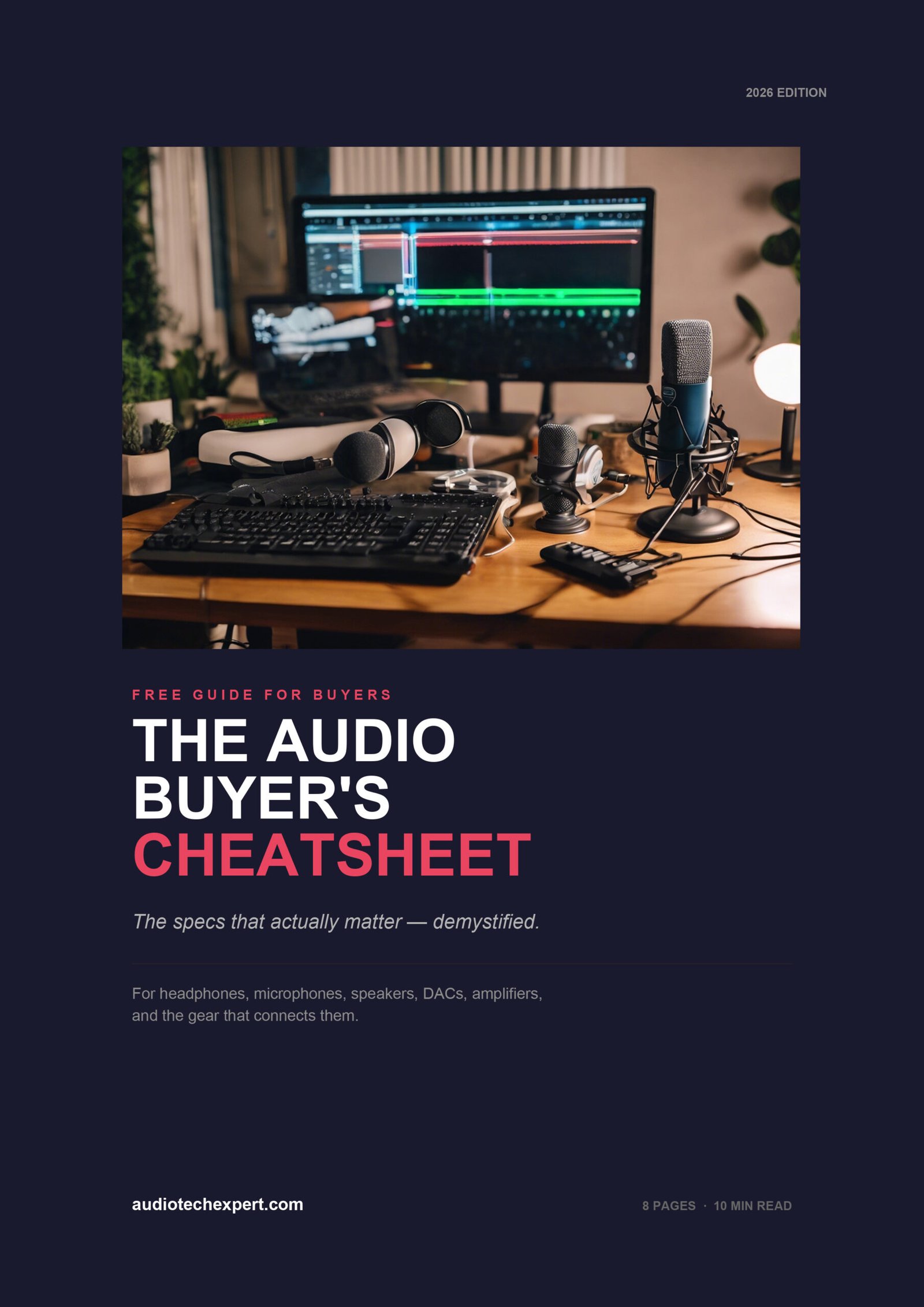
FREE DOWNLOAD
Stop Guessing. Start Buying Smart.
The specs that actually matter, demystified.
Headphones, microphones, the spec sheet jargon you can ignore — all in one quick-reference PDF. Free, instant, no fluff.
Send Me the CheatsheetYou'll also receive occasional new guide notifications. Unsubscribe anytime. No spam, ever.