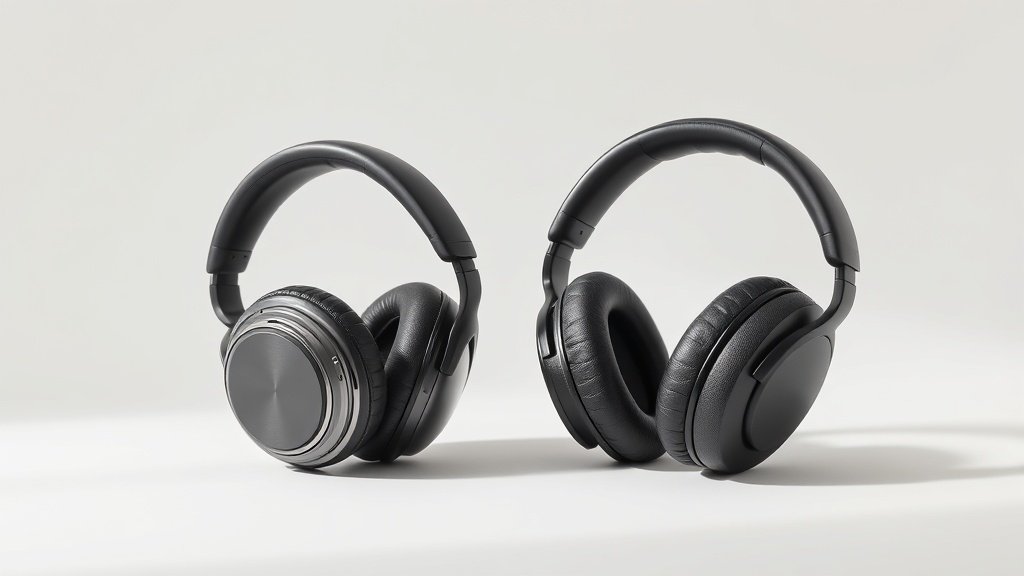
Most people use noise cancelling and noise isolation interchangeably, but these fundamentally different technologies work through opposite approaches and excel in completely different acoustic environments.
Active noise cancelling uses microphones and processing circuits to generate anti-phase sound waves that cancel incoming noise. Passive noise isolation relies entirely on physical materials and design to block sound from reaching your ears. The distinction matters because each method handles different frequency ranges and noise types with varying degrees of success.
This guide examines how both technologies work, their strengths and limitations, and which approach serves different listening scenarios best. We will explore real-world performance differences and explain why some manufacturers combine both methods in premium headphone designs.
How Active Noise Cancelling Works
Active noise cancelling systems use external microphones to detect ambient sound, then generate inverted audio signals through the headphone drivers to cancel unwanted noise. The Sony WH-1000XM5 and Bose QuietComfort 45 represent current benchmarks for this technology. Digital signal processors analyse incoming sound waves and create precise anti-phase responses within milliseconds.
The effectiveness depends heavily on consistent, predictable noise sources. Aircraft engines, air conditioning units, and traffic hum get reduced dramatically because their frequencies remain relatively stable. The Sennheiser Momentum 4 Wireless demonstrates this principle well, cutting low-frequency drone by 20-30 decibels while maintaining excellent audio quality during music playback.
However, active systems struggle with sudden sounds, human voices, and high-frequency noise. The processing cannot react quickly enough to irregular audio events, and the physics of anti-phase cancellation work poorly above 2-3 kHz. This explains why conversation still penetrates even the most sophisticated noise cancelling headphones during airline flights.
Understanding Passive Noise Isolation
Passive isolation blocks sound through physical barriers: thick padding, dense materials, and tight seals around the ears. The Audio-Technica ATH-M50x and Beyerdynamic DT 770 Pro achieve excellent isolation purely through design and materials. No electronics or battery power are required, making this approach completely reliable and immune to technical failures.
Closed-back designs create the foundation for effective isolation. The headphone cups form sealed chambers around each ear, while dense foam padding absorbs sound energy before it reaches the ear canal. The Shure SRH840 demonstrates professional-grade passive isolation that recording engineers trust during tracking sessions where microphone bleed must be minimised.
Dense materials and tight clamping force determine isolation effectiveness. The V-Moda Crossfade M-100 uses substantial padding and firm headband pressure to achieve consistent 15-20 decibel reduction across most frequencies. Unlike active cancelling, passive isolation works equally well across the entire frequency spectrum, from deep bass through high treble ranges.
Active cancelling excels against steady drone while passive isolation provides consistent protection across all frequencies without battery dependence.
Frequency Response Differences
The two approaches handle different parts of the frequency spectrum with varying effectiveness. Active noise cancelling performs best below 500 Hz, where wavelengths are long enough for anti-phase processing to work reliably. The Bose QuietComfort 45 can reduce low-frequency rumble by 25-30 decibels, making subway rides and flights dramatically quieter.
Passive isolation provides more consistent performance across all frequencies. While it may only achieve 15-20 decibel reduction in low frequencies compared to active systems, it maintains that performance through midrange and treble. The Focal Stellia closed-back headphones demonstrate how premium passive design can rival active cancelling for overall noise reduction while delivering superior audio fidelity.
Many premium models now combine both approaches. The Apple AirPods Max uses active cancelling for low-frequency control while relying on excellent passive isolation for higher frequencies. This hybrid approach addresses the weaknesses of each individual method, though it increases complexity, weight, and cost significantly.
Battery Life and Reliability Considerations
Active noise cancelling systems require constant power, typically reducing overall battery life by 30-50 percent compared to passive playback modes. The Sony WH-1000XM5 delivers around 30 hours with cancelling active, while similar headphones without active processing can exceed 50 hours. This limitation becomes critical during long flights or extended listening sessions where charging opportunities are limited.
Passive isolation never fails or requires power. Studio professionals often prefer models like the Beyerdynamic DT 770 Pro precisely because isolation performance remains constant regardless of battery status or electronic component reliability. Active systems can suffer from processor glitches, microphone failures, or firmware bugs that compromise noise reduction effectiveness.
Environmental factors also affect active cancelling performance. Wind noise can overload external microphones, causing some systems to reduce cancelling effectiveness automatically. Temperature extremes and humidity can impact electronic components, while passive isolation materials maintain consistent performance across all weather conditions and usage scenarios.
Audio Quality Impact
Active noise cancelling inevitably affects audio quality through digital processing and anti-phase signal generation. Even premium models like the Mark Levinson No. 5909 introduce subtle artifacts during cancelling operation. The processing chain adds latency, potential distortion, and frequency response alterations that purist listeners find objectionable.
Passive isolation allows completely unprocessed audio reproduction. Reference headphones like the Sennheiser HD 650 rely entirely on passive design, ensuring that music reaches your ears without digital intervention or processing artifacts. This approach appeals to critical listeners who prioritise absolute fidelity over convenience features.
Some manufacturers address this compromise through sophisticated processing. The Technics EAH-A800 uses advanced algorithms to minimise audio degradation during active cancelling, though even the best implementations introduce measurable changes to frequency response and dynamics compared to passive-only operation modes.
Assuming active noise cancelling works equally well against all types of noise. Active systems excel against steady, predictable sounds but provide little benefit against sudden noises, voices, or high-frequency content. Choose passive isolation for more consistent protection across varied acoustic environments.
Believing passive isolation requires uncomfortable clamping force to be effective. Well-designed padding and materials can provide excellent isolation with reasonable comfort levels. Models like the Audio-Technica ATH-M50x demonstrate that effective passive design does not require excessive pressure or weight.
Expecting active cancelling to work properly with low battery levels. Most systems reduce cancelling effectiveness significantly as battery power drops, sometimes creating worse audio quality than no cancelling at all. Monitor battery levels carefully and carry charging cables for critical listening situations.
Conclusion
Choose active noise cancelling for consistent low-frequency noise like aircraft engines or office air conditioning. Select passive isolation when you need reliable protection across all frequencies without battery dependence. The best solution often combines both approaches, though pure passive designs offer superior audio quality and complete reliability for serious listening applications.

FREE DOWNLOAD
Stop Guessing. Start Buying Smart.
The specs that actually matter, demystified.
Headphones, microphones, the spec sheet jargon you can ignore — all in one quick-reference PDF. Free, instant, no fluff.
Send Me the CheatsheetYou'll also receive occasional new guide notifications. Unsubscribe anytime. No spam, ever.