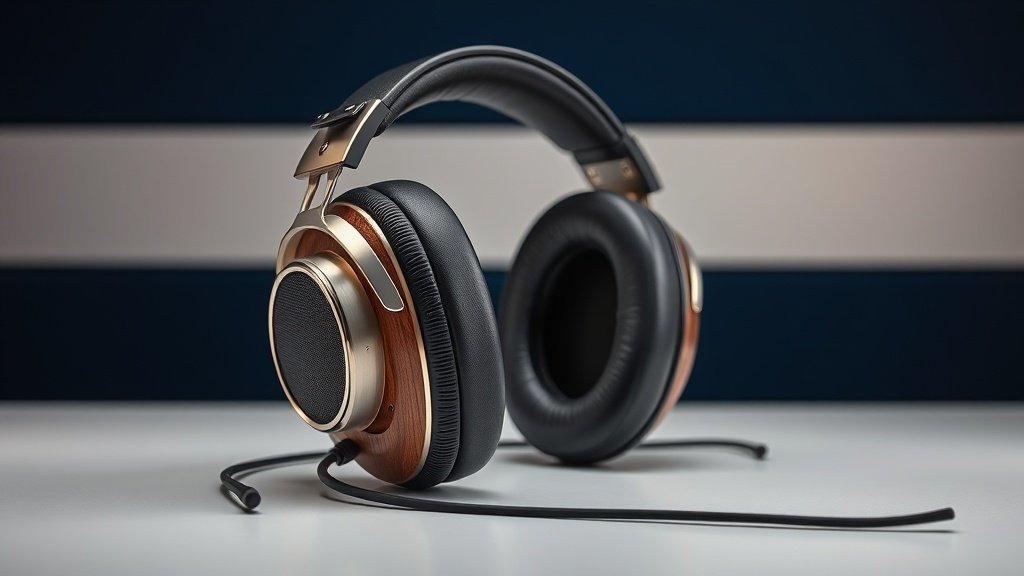
A thousand-pound headphone uses the same basic principles as a fifty-pound model, yet the price difference reflects engineering choices that fundamentally alter how sound reaches your ears.
Premium audiophile headphones command prices that seem astronomical compared to consumer models, but these costs reflect genuine engineering investments rather than marketing hype. After years of obsessively buying, using and comparing audio gear, the price differences become clear when you examine what actually happens inside the enclosure.
This guide breaks down the real factors driving audiophile headphone costs, from driver technology and materials to manufacturing processes and research investments. Understanding these elements helps separate genuine value from overpriced marketing exercises.
Driver Technology and Precision Manufacturing
The transducer represents the most significant cost factor in premium headphones. Companies like Focal invest millions developing beryllium drivers for models such as the Utopia, where the dome material costs more than entire budget headphones. Beryllium offers exceptional stiffness-to-weight ratios that eliminate cone breakup modes, but machining this toxic metal requires specialised facilities and safety protocols that dramatically increase production costs.
Planar magnetic drivers in headphones like the Audeze LCD-X demonstrate another expensive approach. These designs sandwich ultra-thin conductive traces between powerful magnets, requiring precision manufacturing tolerances measured in micrometres. The magnetic arrays alone cost hundreds of pounds to produce, using rare earth elements that fluctuate wildly in price based on global supply chains.
Electrostatic headphones such as the Stax SR-X9000 represent the extreme end of driver complexity. These designs use charged diaphragms thinner than cling film suspended between perforated metal plates, requiring clean room manufacturing environments similar to semiconductor production. The specialised amplification systems needed for electrostatic operation add further costs that trickle down to the headphone pricing.
Materials Engineering and Acoustic Design
Premium headphone construction extends far beyond the drivers themselves. The Sennheiser HD800S uses a specialised polymer for its driver surround that costs fifty times more than conventional foam, chosen specifically for its acoustic transparency and long-term stability. These materials often come from aerospace or medical industries where volume production does not exist.
Enclosure materials significantly impact both sound quality and manufacturing costs. The ZMF Verite employs hand-selected wood that requires months of seasoning and careful machining to achieve consistent acoustic properties. Each piece of wood responds differently to humidity and temperature changes, requiring individual tuning during assembly. This artisanal approach cannot scale to mass production economics.
Cable and connector quality represents another often-overlooked expense. Premium models use oxygen-free copper conductors, gold-plated connectors, and specialised jacket materials that resist oxidation and mechanical stress. The Beyerdynamic T1 includes connectors that cost more than the entire cable assembly in budget headphones, but these components ensure signal integrity over decades of use rather than months.
The difference between a fifty-pound driver and a five-hundred-pound driver often lies in tolerances measured in micrometres rather than millimetres.
Research and Development Investments
Audiophile headphone companies operate with dramatically different research timelines compared to consumer electronics manufacturers. Developing the driver technology for the Focal Stellia required four years of acoustic modelling, prototype testing, and manufacturing process refinement before the first production unit reached customers. These development costs must be recovered across relatively small production runs, often fewer than ten thousand units annually.
Acoustic measurement and testing equipment alone represents massive capital investments. Proper anechoic chambers cost millions to construct and maintain, while the precision measurement microphones used for driver matching cost thousands each. Companies like Grado still hand-match drivers using trained listeners, a process that requires years of training and cannot be automated or scaled efficiently.
Patent licensing adds hidden costs to many premium designs. Planar magnetic technology, advanced damping materials, and specialised driver topologies often require royalty payments to patent holders. These fees increase with each unit produced, making low-volume premium products proportionally more expensive than mass market alternatives.
Manufacturing Scale and Quality Control
Premium headphone manufacturers operate at fundamentally different scales compared to mass market producers. While companies like Sony produce millions of headphones annually using highly automated processes, audiophile manufacturers typically produce hundreds or low thousands of each model. This small scale prevents the economies that drive down consumer electronics pricing.
Quality control standards in premium audio far exceed consumer electronics norms. Each Audeze headphone undergoes individual frequency response measurement and driver matching, with units falling outside tight tolerances rejected entirely. This process can result in rejection rates exceeding twenty percent, costs that must be absorbed by the units that pass inspection. Mass market manufacturers typically use statistical sampling rather than individual unit testing.
Hand assembly remains common in premium headphone production, particularly for models using exotic materials or complex driver designs. The craftspeople assembling headphones like the Audio-Technica ATH-W3000ANV require years of training and command wages that reflect their specialised skills. Attempts to automate these processes often compromise the precision that justifies premium pricing.
Market Positioning and Brand Investment
Audiophile headphone companies invest heavily in brand positioning and customer education, costs that ultimately flow through to product pricing. Maintaining relationships with professional reviewers, sponsoring audio shows, and providing extensive customer support for complex products requires substantial ongoing investment. These companies cannot rely on volume sales to amortise marketing costs.
Warranty and service support for premium headphones extends far beyond consumer electronics standards. Companies like Beyerdynamic offer decades-long parts availability and repair services, maintaining inventory and expertise for models long discontinued. This commitment requires careful financial planning and contributes to initial product pricing.
Distribution networks for audiophile products operate differently from mass market channels. Specialised dealers require higher margins to justify carrying low-volume products, while direct sales require companies to maintain expensive customer service and technical support capabilities. These distribution costs compound with each step between manufacturer and customer.
Assuming expensive headphones automatically sound better than cheaper alternatives. Price often reflects exotic materials or manufacturing complexity that may not translate to audible improvements for all listeners. Always audition headphones in your intended use environment before purchasing.
Ignoring the amplification requirements of premium headphones. Many expensive headphones require specialised amplification to perform properly, adding significant costs beyond the initial purchase. Factor these requirements into your total system budget.
Believing that higher prices always indicate better build quality. Some premium headphones prioritise exotic materials or limited production over long-term durability. Research the specific construction methods and user experiences rather than relying on price as a quality indicator.
Conclusion
Premium audiophile headphones command high prices due to genuine engineering and manufacturing constraints rather than pure marketing inflation. The combination of exotic materials, precision manufacturing, small production scales, and extensive research investments creates cost structures fundamentally different from consumer electronics. Understanding these factors helps identify products that justify their premium pricing versus those trading purely on brand prestige.
FREE DOWNLOAD
Stop Guessing. Start Buying Smart.
The specs that actually matter, demystified.
Headphones, microphones, the spec sheet jargon you can ignore — all in one quick-reference PDF. Free, instant, no fluff.
Send Me the CheatsheetYou'll also receive occasional new guide notifications. Unsubscribe anytime. No spam, ever.