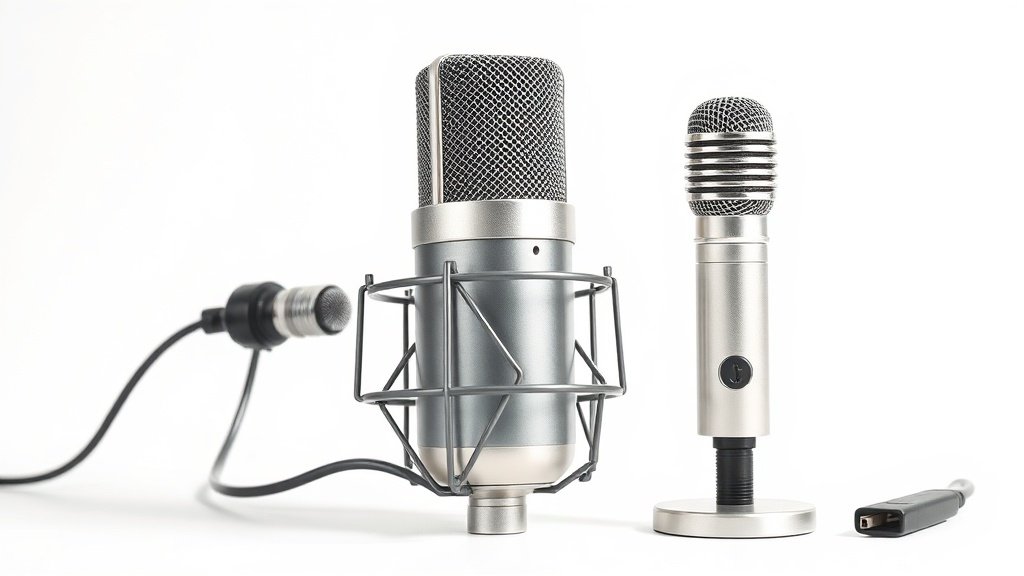
A fifty pound microphone and a five hundred pound microphone both convert sound into electrical signals, yet one sounds like a telephone while the other captures studio-quality recordings.
The fundamental engineering choices that separate budget microphones from professional models come down to three critical components: the capsule assembly, the internal preamp circuitry, and the mechanical construction. These differences create the distinctive thin, harsh, and noisy character that defines cheap microphone sound.
Understanding these technical distinctions helps explain why the Audio-Technica AT2020 sounds dramatically cleaner than a generic USB microphone at half the price, and why professional engineers choose specific microphones for different recording scenarios.
Capsule Construction and Diaphragm Materials
The microphone capsule represents the most critical component determining sound quality, and budget models compromise heavily in this area. Professional condensers like the Rode PodMic use precision-machined backplates with consistent spacing between the diaphragm and the fixed electrode. This precise spacing ensures linear frequency response and low distortion across the entire audio spectrum.
Cheap microphones employ stamped metal backplates with inconsistent tolerances, creating uneven capacitance that translates to frequency response irregularities. The diaphragm materials differ substantially as well. Professional capsules use gold-sputtered polymer diaphragms tensioned to exact specifications, while budget models often use metallised plastic films with poor tension control. This results in the characteristic resonant peaks and valleys that make cheap microphones sound hollow or nasal.
The Shure SM58, though a dynamic microphone, demonstrates superior diaphragm engineering with its pneumatic shock mount system that isolates the capsule from handling noise. Budget dynamics lack this isolation, allowing mechanical vibrations to colour the audio signal with unwanted artifacts.
Preamp Quality and Circuit Design
Internal preamp circuits in budget microphones represent another significant compromise point. Professional microphones like the Neumann TLM 103 use discrete transistor circuits with carefully selected components and proper power supply filtering. These circuits provide clean amplification with minimal noise and distortion, particularly important for condenser microphones that require phantom power.
Budget USB microphones typically employ single-chip solutions that combine the preamp, analogue-to-digital conversion, and USB interface functions. These integrated circuits prioritise cost savings over audio performance, resulting in higher noise floors, limited dynamic range, and poor rejection of electromagnetic interference. The Blue Yeti, while popular, demonstrates these limitations compared to professional interfaces paired with dedicated microphones.
Professional capsules maintain precise diaphragm spacing measured in micrometers while budget models accept tolerances that destroy frequency response linearity.
Frequency Response and Polar Pattern Accuracy
The shaped frequency response of cheap microphones creates their distinctive sound character. Budget condensers often exhibit pronounced presence peaks around 5-8 kHz designed to create artificial clarity, but these peaks emphasise sibilance and harshness rather than natural detail. Professional microphones like the AKG C414 provide smooth, extended frequency response that captures sources accurately without imposing sonic character.
Polar pattern consistency represents another area where engineering quality shows. Professional microphones maintain their specified pickup patterns across the entire frequency range, while budget models often exhibit pattern distortion at higher frequencies. A cheap cardioid microphone might become increasingly omnidirectional above 10 kHz, reducing its ability to reject background noise and room reflections.
The Electro-Voice RE20 exemplifies professional polar pattern design with its Variable-D technology that maintains consistent pickup characteristics regardless of source distance, eliminating the proximity effect that plagues many dynamic microphones. Budget dynamics cannot match this level of acoustic engineering sophistication.
Mechanical Construction and Isolation
The physical construction quality of microphones directly impacts their acoustic performance and longevity. Professional microphones incorporate sophisticated shock mounting systems that isolate the capsule from mechanical vibrations. The Rode PodMic uses internal shock mounting that prevents desk vibrations and handling noise from reaching the capsule, while budget microphones often mount their capsules rigidly to the housing.
Housing materials and construction methods also differ significantly. Professional microphones use machined metal housings with precise tolerances and internal acoustic treatments. The Shure SM7B features internal shock mounting, electromagnetic shielding, and acoustic foam that contributes to its exceptional performance. Budget microphones rely on thin plastic housings that provide minimal shielding and can introduce resonances that colour the recorded sound.
The grille design and internal pop filtering systems separate professional and budget designs as well. Quality microphones incorporate multi-layer grilles with acoustic damping materials, while cheap models often use simple perforated covers that offer minimal protection against plosives and breath noise.
Power Supply and Signal Path Considerations
Professional microphones implement superior power supply designs that directly impact audio quality. Condenser microphones require stable phantom power conversion to bias the capsule properly. High-end condensers like the Neumann U87 feature sophisticated internal voltage regulation that maintains consistent performance regardless of phantom power quality from the mixing console or interface.
Budget condensers often lack proper power supply filtering and regulation, making them susceptible to noise and instability when powered by lower-quality interfaces. This creates the characteristic hiss and instability that marks cheap microphone performance. The signal path from capsule to output connector also differs substantially, with professional models using high-quality cables, connectors, and internal wiring that preserve signal integrity.
Assuming expensive microphones automatically sound better regardless of application. Professional microphones excel in their intended applications but may perform poorly in unsuitable situations. Choose microphones based on specific recording requirements rather than price alone.
Ignoring the acoustic environment when evaluating microphone quality. Poor room acoustics can make professional microphones sound worse than budget models in some situations. Address acoustic treatment before upgrading microphones for maximum impact.
Expecting budget microphones to match professional performance with software processing. EQ and compression cannot compensate for fundamental capsule and preamp limitations. Digital processing works best when starting with clean, well-captured source material.
Conclusion
The engineering differences between cheap and professional microphones extend far beyond marketing claims to fundamental design choices in capsule construction, preamp quality, and mechanical isolation. These technical distinctions create measurable performance differences that software cannot fully compensate for, making microphone selection crucial for achieving professional recording results.

FREE DOWNLOAD
Stop Guessing. Start Buying Smart.
The specs that actually matter, demystified.
Headphones, microphones, the spec sheet jargon you can ignore — all in one quick-reference PDF. Free, instant, no fluff.
Send Me the CheatsheetYou'll also receive occasional new guide notifications. Unsubscribe anytime. No spam, ever.