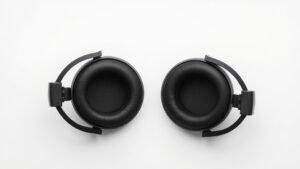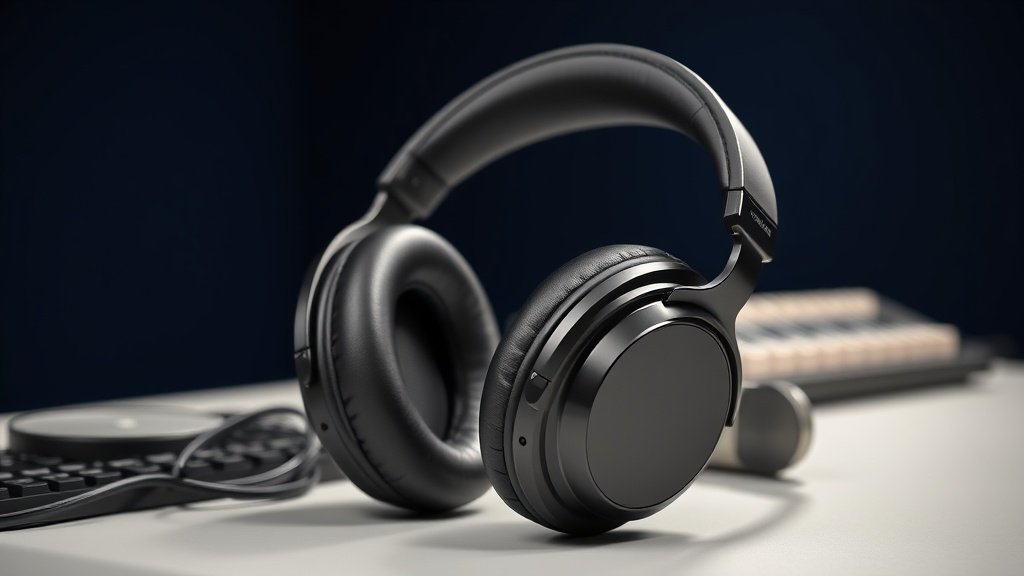
The distance between your ear and the headphone driver determines more about sound quality than most people realise, yet earcup size remains the most overlooked specification on the spec sheet.
After years of obsessively buying, using and comparing audio gear, and isolation effectiveness. The internal air volume created by different earcup sizes changes how drivers interact with your ears in measurable ways.
This guide examines how circumaural and supra-aural designs affect frequency response, why larger earcups generally produce better bass reproduction, and when smaller designs make practical sense despite acoustic compromises. We will cover isolation differences, comfort implications, and real-world performance across various listening scenarios.
Internal Air Volume and Bass Response
Large earcups create more internal air space around your ears, allowing headphone drivers to move more freely and reproduce lower frequencies with greater authority. The Beyerdynamic DT 1990 Pro demonstrates this principle with its spacious circumaural design that extends bass response down to 5Hz. That extra air volume acts as an acoustic chamber that reinforces low-frequency energy rather than constraining it.
Smaller earcups compress this air space, limiting driver excursion and reducing bass extension. The Audio-Technica ATH-M40x, while competent, cannot match the low-end authority of larger designs like the Sennheiser HD 660S precisely because of this volumetric constraint. The physics are straightforward: less air volume means less acoustic coupling with your ear canal, resulting in thinner bass reproduction.
This relationship becomes critical for mixing and mastering work where accurate low-frequency monitoring determines mix translation. Large circumaural designs like the Focal Clear Pro provide the air volume necessary for proper bass representation, while compact models often require bass boost circuits that introduce phase complications.
Soundstage Width and Driver Distance
Earcup size directly affects soundstage perception by controlling the distance between drivers and your ears. Larger earcups position drivers further away, creating a more spacious presentation that mimics listening to speakers in a room. The HiFiMan Arya exemplifies this principle with its expansive earcup design that generates an unusually wide soundstage for closed-back headphones.
Smaller earcups place drivers closer to your ears, creating a more intimate but potentially claustrophobic listening experience. The Sony WH-1000XM5, despite excellent noise cancellation, cannot match the spatial presentation of larger designs because the reduced driver-to-ear distance compresses the perceived acoustic space.
For studio monitoring, this soundstage difference affects mix decisions. Engineers mixing on compact headphones often create mixes that sound too wide on speakers because they compensate for the compressed soundstage. Conversely, mixes created on spacious designs like the AKG K702 translate more predictably to loudspeaker systems.
Large earcups create acoustic space that allows drivers to behave more like miniature loudspeakers rather than tiny transducers pressed against your ears.
Passive Isolation Performance
Circumaural earcups that completely surround your ears provide superior passive isolation compared to supra-aural designs that rest on your ears. The physical seal created by large ear pads blocks external noise mechanically, reducing ambient sound by 15-25dB across most frequencies. Professional models like the Sony MDR-7506 achieve effective isolation through generous earcup dimensions that accommodate various ear shapes.
Smaller supra-aural designs like the Grado SR80x sacrifice isolation for portability and open soundstage characteristics. These compact earcups cannot form complete seals around your ears, allowing external noise to leak in while also broadcasting your music outward. The trade-off works for home listening but becomes problematic in shared spaces or noisy environments.
Active noise cancellation systems work more effectively with larger earcups because they have better baseline passive isolation to build upon. The Bose QuietComfort 45 combines spacious circumaural design with electronic cancellation to achieve industry-leading isolation performance that smaller designs cannot match regardless of processing power.
Comfort and Wearing Duration
Large earcups distribute weight over a greater surface area, reducing pressure points that cause fatigue during extended listening sessions. The Sennheiser HD 800S uses oversized velour pads that spread clamping force across the entire ear area rather than concentrating pressure on specific points. This design principle becomes crucial for professional applications where engineers wear headphones for hours continuously.
However, larger earcups add overall headphone weight and require stronger headband clamping force to maintain proper positioning. The Audeze LCD-X weighs 612 grams partly due to its substantial earcup construction, creating neck strain that some users find uncomfortable despite excellent acoustic performance. The physics of leverage mean that additional earcup weight gets magnified at the headband pivot point.
Smaller earcups reduce total headphone weight but concentrate clamping pressure on your ears rather than around them. Models like the Beyerdynamic DT 770 Pro 80 balance earcup size with weight distribution effectively, though they cannot match the ultimate comfort of larger circumaural designs for marathon listening sessions.
Practical Applications and Use Cases
Studio mixing and mastering benefit from large circumaural designs that provide accurate bass response and wide soundstage presentation. The Neumann NDH 30 exemplifies this approach with substantial earcups that create proper acoustic coupling for critical listening applications. Professional engineers choose these designs specifically because earcup size directly correlates with mix translation accuracy.
Portable listening scenarios favour compact designs that sacrifice some acoustic performance for practical convenience. The Audio-Technica ATH-M50x remains popular for location recording precisely because its moderate earcup size balances performance with portability. Smaller earcups also generate less visual bulk, making them more socially acceptable for public use.
Gaming applications often require extended wearing comfort, making large circumaural designs preferable despite increased weight. The Sennheiser HD 560S provides the spacious earcup design necessary for comfortable all-day gaming while maintaining the wide soundstage that enhances spatial audio cues in competitive gaming scenarios.
Assuming all circumaural headphones provide identical isolation performance. Earcup depth and pad material significantly affect sealing effectiveness even among large designs. Test isolation performance with real-world noise sources rather than relying on circumaural designation alone.
Choosing compact earcups for professional monitoring to save desk space. The acoustic compromises introduced by small earcup volumes cannot be corrected through equalization or amplification. Invest in proper headphone stands rather than compromising monitoring accuracy for convenience.
Ignoring earcup size when selecting headphones for extended use. Comfort during brief listening tests does not predict long-term wearability under professional conditions. Consider earcup dimensions as carefully as frequency response when selecting headphones for demanding applications.
Conclusion
Earcup size fundamentally shapes headphone performance through acoustic volume, driver positioning, and isolation characteristics. Large circumaural designs deliver superior bass extension and soundstage width at the cost of increased weight, while compact alternatives prioritise portability over ultimate performance. Match earcup dimensions to your specific applications rather than accepting one-size-fits-all solutions.

FREE DOWNLOAD
Stop Guessing. Start Buying Smart.
The specs that actually matter, demystified.
Headphones, microphones, the spec sheet jargon you can ignore — all in one quick-reference PDF. Free, instant, no fluff.
Send Me the CheatsheetYou'll also receive occasional new guide notifications. Unsubscribe anytime. No spam, ever.