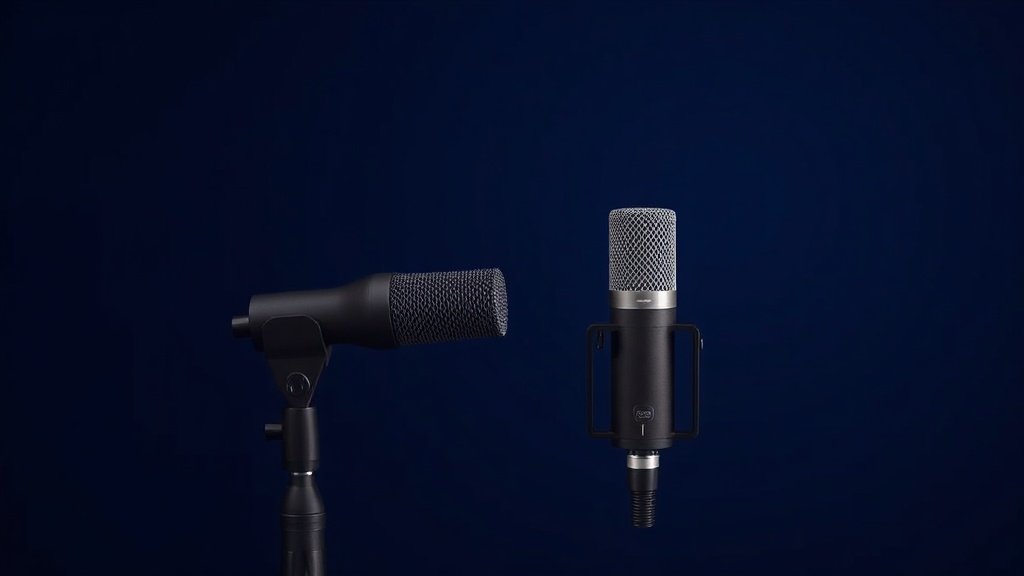
The difference between a large and small diaphragm condenser goes far deeper than physical size, affecting frequency response, polar pattern accuracy, and the fundamental character of every recording you make.
After years of obsessively buying, using and comparing audio gear, I have learned that diaphragm size shapes the sound in predictable ways. Large diaphragm condensers typically measure 25mm or larger, whilst small diaphragm models sit around 12-16mm. This physical difference creates distinct sonic characteristics that determine which microphone serves each recording situation.
This guide examines how diaphragm size affects frequency response, directional characteristics, and practical recording applications. We will cover when large diaphragm condensers excel, where small diaphragm models prove superior, and how to match each type to specific sources and recording environments.
How Diaphragm Size Affects Sound Character
Large diaphragm condensers like the Neumann U87 or Audio-Technica AT4040 exhibit enhanced low frequency response and smoother midrange character. The larger surface area captures more acoustic energy, particularly in the bass region, creating that rich, full-bodied sound associated with professional vocal recordings. However, this same size creates slight resonances and colorations that add warmth but reduce absolute accuracy.
Small diaphragm condensers such as the AKG C451 or Shure SM81 respond faster to transient information and maintain flatter frequency response across their range. The reduced mass allows the diaphragm to follow rapid acoustic changes more precisely, capturing the attack of percussion instruments and string plucks with exceptional clarity. The trade-off comes in reduced bass response and a more clinical, less coloured presentation.
The polar pattern also behaves differently between sizes. Large diaphragm capsules struggle to maintain consistent directional characteristics across all frequencies, often becoming more omnidirectional at lower frequencies. Small diaphragm designs hold their polar pattern more accurately across the frequency spectrum, providing better isolation in multi-source recording situations.
Large diaphragm condensers capture the body of sound whilst small diaphragm models capture the detail within that sound.
Large Diaphragm Applications and Advantages
Vocal recording represents the classic application for large diaphragm condensers. The enhanced low-mid response fills out the human voice naturally, whilst the subtle harmonic distortion adds pleasing character. I consistently reach for microphones like the Rode NTK or Warm Audio WA-251 when recording lead vocals, as they provide the presence and body that sits well in dense mixes without excessive processing.
Bass instruments benefit significantly from large diaphragm designs. Recording acoustic bass guitar with a large diaphragm condenser placed near the f-hole captures both the fundamental frequencies and the wooden resonance of the instrument body. The same principle applies to bass drums, where the extended low frequency response of models like the AKG C414 provides full, round bottom end that small diaphragm microphones simply cannot match.
Room ambience recording also favours large diaphragm condensers when you want to capture the full spectrum of reverberant energy. Placed several feet from acoustic sources, these microphones gather the complete harmonic content reflected from room surfaces, creating natural-sounding ambient tracks that add space without thinning out the low end.
Small Diaphragm Applications and Precision
Acoustic instruments with complex transient behaviour demand the precision of small diaphragm condensers. Recording acoustic guitar fingerpicking, mandolin tremolo, or violin bow changes requires the fast response that only a light diaphragm provides. The Neumann KM184 or Austrian Audio OC18 capture these subtle performance details that larger capsules tend to smooth over or miss entirely.
Drum overhead applications showcase where small diaphragm accuracy matters most. The cymbals, hi-hats, and drum transients contain crucial high-frequency information that defines the kit sound. Small diaphragm condensers maintain their polar pattern consistency, allowing precise stereo imaging whilst avoiding the bass buildup that large diaphragm models often introduce when placed above the kit.
Distance recording situations favour small diaphragm designs when accuracy matters more than character. Recording string sections, choirs, or acoustic ensembles from several feet away requires microphones that capture the true frequency balance without adding unwanted coloration. The flatter response of small diaphragm condensers ensures that the natural timbre of instruments carries through without artificial enhancement or frequency imbalance.
Frequency Response and Technical Considerations
The frequency response curves reveal the fundamental differences between diaphragm sizes. Large diaphragm condensers typically show a gentle rise in the 40-200Hz region, contributing to their perceived warmth and fullness. Many models also exhibit a presence peak around 10-15kHz that adds air and clarity to sources. This shaped response works beautifully for vocals and bass-heavy sources but can create problems when recording sources that already contain significant low-frequency content.
Small diaphragm condensers generally maintain flatter response from their low-frequency rolloff point up through the midrange, with any presence peaks appearing higher in frequency around 15-20kHz. This response characteristic makes them excellent choices for sources where tonal accuracy matters more than character enhancement. The faster transient response also means they capture reverb tails and ambient decay more accurately, making them valuable for spatial recording techniques.
Self-noise specifications often favour large diaphragm designs due to their greater acoustic sensitivity. However, the practical difference rarely matters in typical recording situations. The choice between diaphragm sizes should focus on frequency response and transient behaviour rather than noise floor specifications, as both types perform adequately in properly treated recording environments.
Using large diaphragm condensers on sources that already contain significant low-frequency content creates muddy recordings. Acoustic guitar recorded too close with a large diaphragm condenser often sounds boomy and unclear because the microphone adds bass response where none is needed. Choose small diaphragm models for instruments that generate their own low-frequency content.
Expecting small diaphragm condensers to provide the same vocal intimacy as large diaphragm models leads to disappointing results. The clinical accuracy of small diaphragm designs works against vocal recording, where some coloration and low-frequency enhancement helps the voice cut through busy mixes. Reserve small diaphragm condensers for sources where precision matters more than character.
Assuming expensive large diaphragm condensers automatically sound better than small diaphragm alternatives ignores the fundamental physics involved. A well-chosen small diaphragm condenser like the Oktava MK-012 often delivers superior results on acoustic instruments compared to costly large diaphragm models that add unwanted coloration to the source.
Conclusion
Large diaphragm condensers excel at capturing the body and character of vocals, bass instruments, and sources where warmth and presence matter most. Small diaphragm models provide the accuracy and transient response essential for acoustic instruments, drum overheads, and applications where precise frequency balance takes priority over character enhancement. Understanding these fundamental differences allows you to choose the right tool for each recording situation rather than relying on price or reputation alone.

FREE DOWNLOAD
Stop Guessing. Start Buying Smart.
The specs that actually matter, demystified.
Headphones, microphones, the spec sheet jargon you can ignore — all in one quick-reference PDF. Free, instant, no fluff.
Send Me the CheatsheetYou'll also receive occasional new guide notifications. Unsubscribe anytime. No spam, ever.