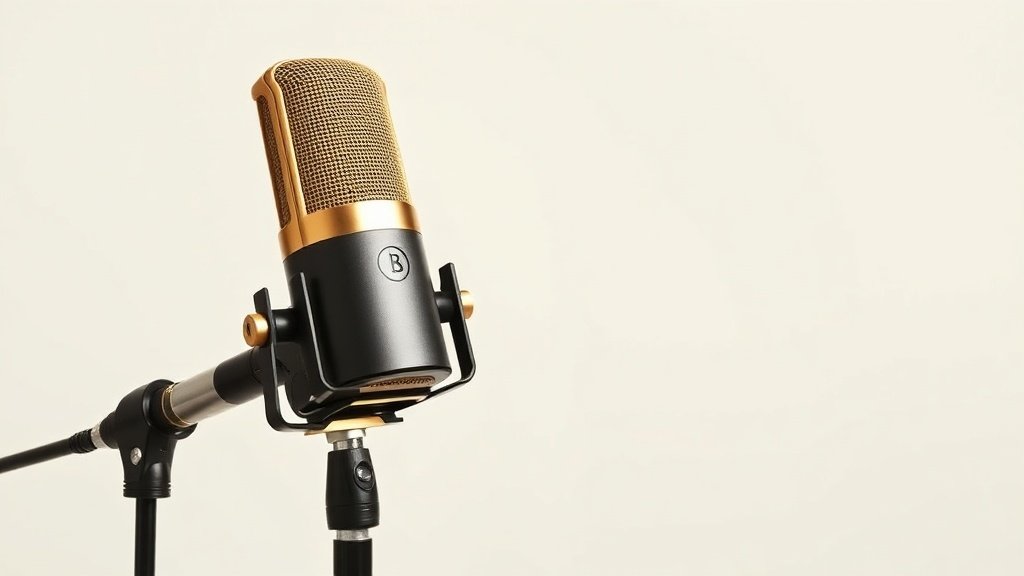
Every microphone you plug in generates its own quiet hiss that sits beneath your recordings, and most engineers ignore this spec until a delicate acoustic guitar track disappears into electronic noise.
Self-noise represents the electrical noise floor that every microphone produces when no sound enters the capsule. This background hiss becomes the foundation upon which all your recordings sit, determining whether subtle musical details survive or get buried in unwanted electronic artifacts.
This guide explains how to read self-noise specifications, when these numbers actually matter for your recordings, and which microphone technologies handle quiet sources most effectively. We will examine real-world examples and practical measurement techniques that help you make better microphone choices.
Understanding Self-Noise Specifications
Manufacturers express microphone self-noise in A-weighted decibels, typically showing values between 6 dBA and 25 dBA for professional microphones. The A-weighting filter matches human hearing sensitivity, de-emphasising frequencies below 500 Hz and above 10 kHz where our ears are naturally less sensitive. A Neumann U87, for instance, specifies 15 dBA self-noise, while the quieter Neumann TLM 103 achieves 7 dBA.
These measurements represent the equivalent sound pressure level that would produce the same electrical output as the microphone generates internally. A microphone with 15 dBA self-noise produces the same output level as a 15 dB SPL acoustic signal would generate. This means any sound source quieter than this noise floor will struggle to rise above the microphone electronic background.
Lower numbers indicate quieter microphones, but context matters enormously. The difference between 10 dBA and 15 dBA self-noise rarely affects vocal recordings where the source easily reaches 80 dB SPL or higher. However, that same 5 dB difference becomes critical when recording fingerpicked classical guitar or room ambience where every decibel of noise floor matters.
When Self-Noise Actually Matters
Self-noise becomes problematic when recording quiet sources at significant distances or when heavy gain reduction is applied during mixing. Close-miked vocals, drums, and electric guitar amplifiers rarely encounter self-noise issues because these sources generate strong signals that overwhelm the microphone noise floor. The human voice at normal speaking volume produces roughly 60-70 dB SPL at one metre, easily masking typical microphone self-noise.
Acoustic instruments recorded at distance present the primary challenge. Recording a solo acoustic guitar from two metres away, or capturing the natural reverberation of a piano in a concert hall, requires microphones with exceptional signal-to-noise ratios. The Rode NTK valve microphone, despite its warm character, specifies 20 dBA self-noise which can become audible during quiet guitar passages when recorded from a distance.
Digital audio workstation processing also reveals self-noise that seemed acceptable during recording. Compressing a vocal track by 10 dB brings the noise floor up proportionally, while EQ boosts in the presence range can emphasise the frequency region where microphone self-noise is most audible. Engineers working primarily with heavily processed genres might never notice moderate self-noise levels, while classical recording specialists obsess over every decibel.
Self-noise determines whether subtle musical details survive the recording chain or disappear into the electronic noise floor.
Microphone Technologies and Noise Performance
Large-diaphragm condenser microphones generally achieve the lowest self-noise figures because their substantial capsule area generates stronger electrical signals relative to the internal electronics noise. The Neumann TLM 49 achieves 8 dBA self-noise through careful electronic design and a large 34mm capsule. Small-diaphragm condensers typically specify higher self-noise values, though modern designs like the DPA 4011 achieve respectable 13 dBA performance despite their compact size.
Dynamic microphones present a different noise story altogether. The Shure SM57 does not specify self-noise because dynamic microphones generate such low output levels that the connected preamp noise dominates the system noise floor. A dynamic microphone might exhibit equivalent self-noise around 20-25 dBA, but this specification becomes meaningless when you need 60 dB of preamp gain to achieve recording levels. Preamp noise, not microphone noise, determines the system performance.
Ribbon microphones occupy the highest self-noise territory due to their extremely low output sensitivity. The Royer R-121 produces beautiful smooth recordings but requires significant preamp gain where interface noise becomes the limiting factor. Modern active ribbon designs like the Royer SF-24 incorporate internal electronics to improve the signal-to-noise equation, though they still lag behind the quietest condenser microphones.
Measuring and Evaluating Self-Noise
Practical self-noise evaluation requires more than reading specification sheets because real-world performance depends on your complete recording chain. Set up your microphone in a quiet room, apply normal preamp gain levels, and record 30 seconds of silence. Play this recording back through your monitoring system at typical listening levels to hear what the noise floor actually sounds like in context.
Different microphones exhibit distinct noise characteristics even at similar dBA levels. Some microphones produce smooth white noise that blends naturally with room tone, while others generate more prominent hiss in the 3-8 kHz range where human ears are most sensitive. The Audio-Technica AT4047 specifies 12 dBA self-noise but produces a particularly smooth noise floor that remains unobtrusive even when exposed through heavy processing.
Consider your typical recording scenarios when evaluating self-noise importance. Engineers primarily working with close-miked sources can prioritise other microphone characteristics like frequency response and polar pattern accuracy over ultimate noise performance. Those recording acoustic music, film scoring, or classical music should invest in microphones specifying 10 dBA self-noise or lower, understanding that this performance comes with higher costs and often reduced maximum SPL capabilities.
System Noise vs Microphone Noise
Microphone self-noise represents just one component of your complete recording system noise floor, and often not the limiting factor. Audio interface preamps contribute their own noise, particularly when driving low-output microphones that require substantial gain. A microphone with 8 dBA self-noise connected to a noisy preamp requiring 50 dB gain might produce worse results than a 15 dBA microphone paired with a quieter preamp needing less amplification.
Cable runs and electromagnetic interference add additional noise sources that can overwhelm microphone self-noise in problematic environments. A perfectly quiet microphone becomes useless when positioned near computer monitors, lighting dimmers, or wireless transmitters that inject noise into the signal path. Proper gain staging and clean power distribution often improve recording noise floors more effectively than purchasing marginally quieter microphones.
Digital converter noise floors also influence the final result, though modern audio interfaces typically achieve noise performance that exceeds most microphone capabilities. The RME Babyface Pro specifies equivalent input noise around 5 dBA, meaning the microphone self-noise dominates the recording noise floor rather than the digital conversion process. Focus your noise reduction efforts on the microphone and preamp combination where improvements yield audible benefits.
Engineers assume expensive microphones automatically provide better self-noise performance. Price often reflects other factors like build quality, frequency response character, and brand reputation rather than pure noise specifications. Compare actual dBA specifications rather than relying on cost as a noise performance indicator.
Many engineers ignore system gain staging when evaluating microphone noise. A quiet microphone with low output sensitivity might produce worse noise performance than a slightly noisier model with higher sensitivity when connected to the same preamp. Consider the complete signal chain rather than isolated microphone specifications.
Studio engineers often obsess over self-noise specifications that have no practical impact on their recordings. The difference between 8 dBA and 12 dBA self-noise becomes inaudible when recording typical vocal and instrument sources at normal distances. Evaluate whether your recording applications actually require ultimate noise performance before prioritising this specification.
Conclusion
Self-noise specifications provide valuable guidance for microphone selection, but practical application depends entirely on your recording scenarios. Focus on sub-10 dBA performance for distant acoustic recording and quiet source capture, while allowing higher noise floors for close-miked applications where other microphone characteristics take priority over ultimate noise performance.
FREE DOWNLOAD
Stop Guessing. Start Buying Smart.
The specs that actually matter, demystified.
Headphones, microphones, the spec sheet jargon you can ignore — all in one quick-reference PDF. Free, instant, no fluff.
Send Me the CheatsheetYou'll also receive occasional new guide notifications. Unsubscribe anytime. No spam, ever.